
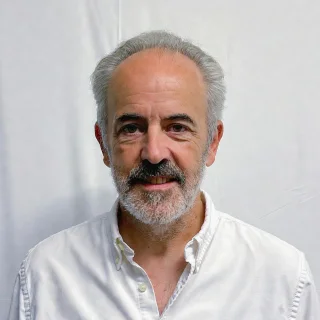
Pablo Hernández de Cos is the favourite to preside over the European Central Bank, according to predictions from government offices. He would be the first Spaniard to lead the institution.
According to moncloa.com, the former governor of the Bank of Spain Pablo Hernández de Cos is emerging as the favourite to head the European Central Bank. This would be the first time a Spaniard has led the institution.
The election is decided in a room where positions are allocated, not in an open vote. 16 votes from the 21 euro countries are needed, representing at least 65% of the eurozone population, and the predictions suggest that this threshold has been surpassed.
The Dutchman Klaas Knot, governor of De Nederlandsche Bank from 2011 to 2025, is expected to take a position in the European Stability Mechanism. The distribution was finalised with a Franco-German pact: Germany retains the chief economist position for Markus Brunnermeier, while France takes the market operations role for Laurence Boone.
Hernández de Cos led the Bank of Spain from 2018 to 2024 and is currently the general director of the Bank for International Settlements. The government of Pedro Sánchez proposed him on November 6, and the first vice president, Carlos Cuerpo, publicly defended his candidacy.
The first challenge he would face is inflation. The eurozone's inflation rate reached 4% in October, double the target of 2%. The Governing Council has hinted that the last meeting of the year, in December, could conclude with an interest rate hike to 2.75%, partly due to rising energy costs stemming from the conflict in Iran.
The first Spaniard aspiring to the ECB arrives with inflation at double the target and a Ukrainian bill that no one wants to sign alone.
The second challenge is Ukraine. The European Union has committed nearly 98.842 billion dollars in aid to the government of Zelenski for 2026 and 2027, structured as state-backed debt. The Commission also proposed an additional budget of 49.415 billion.
There are two more challenges. The public debt of Italy, France, Belgium, and Spain already exceeds 100% of their GDP, and any decision on interest rates has an immediate impact there. Additionally, card payments have surpassed cash for the first time in the eurozone, boosting the digital euro as a central bank currency for everyday payments.
For Spain, the economy is the fourth largest in the eurozone, and its financial sector is very sensitive to monetary policy. Every interest rate move affects mortgages, credit to SMEs, and the balance sheets of banks like Santander and BBVA. Until now, a Spaniard has never held the presidency of the ECB, and Luis de Guindos has been vice president since 2018.
The effective transition would take place in 2027, when Christine Lagarde's term expires. Before that, the recommendation from the euro countries must be finalised in the coming weeks, and the appointment will go through the European Council and the European Parliament.
You may also like