
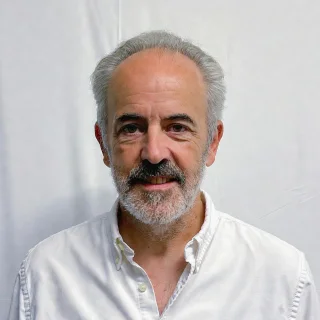
The Spanish economist Pablo Hernández de Cos will assume the Presidency of the European Central Bank in February 2027, succeeding Christine Lagarde. Analysts consulted agree that he will not alter the interest rate path in the short term.
According to Bolsamania, the Spaniard Pablo Hernández de Cos will take up the Presidency of the European Central Bank (ECB) in February 2027, as the successor to the French Christine Lagarde, following an agreement reached this Thursday among European leaders.
At 56 years old, which he will turn in January, he will be the youngest president in the history of the ECB. He joined the Bank of Spain in 1997, of which he was governor from 2018 to 2024, and is part of the ECB's Governing Council.
Lagarde referred to him after her departure as an exceptional and very loyal team member, as well as a very rigorous economist and governor.
“The Gentleman”
Pedro del Pozo, director of Financial Investments at Mutualidad, attributes his appointment to a technical, independent, and pragmatic profile, and to his ability to reach consensus. His candidacy had the explicit support of Pedro Sánchez and Alberto Núñez Feijóo.
Patrick Barbe, senior manager at Neuberger, expects a more technical leadership and quicker decisions, with the capacity to tighten or ease monetary policy depending on the evolution of inflation or growth.
One of the first issues he will have to address is the situation of French debt following the elections expected in France next spring. Alexis Bienvenu, fund manager at La Financière de l'Échiquier, warns that if interest rates become strained, the ECB might consider activating the transmission protection instrument (TPI), created under Lagarde's presidency.
Fabio Balboni, macroeconomic strategist at Wellington Management, describes Hernández de Cos as a “fiscal hawk,” so he would not need to intervene in any circumstance to curb a widening of spreads.
Regarding rates, Ebury maintains a central scenario of a hike in December, followed by a prolonged pause. Barbe agrees with this forecast, although he places the next hike in April and considers that expectation too aggressive.
“We continue to expect the ECB to raise rates in December, as it has already indicated, and we do not foresee a significant change in monetary policy outlook”
Balboni estimates that the reshaping of the ECB's leadership is slightly more accommodative, with a stronger and more balanced Council, and that the review of the monetary policy framework, scheduled for mid-2027, could give the balance sheet a more active role.
You may also like