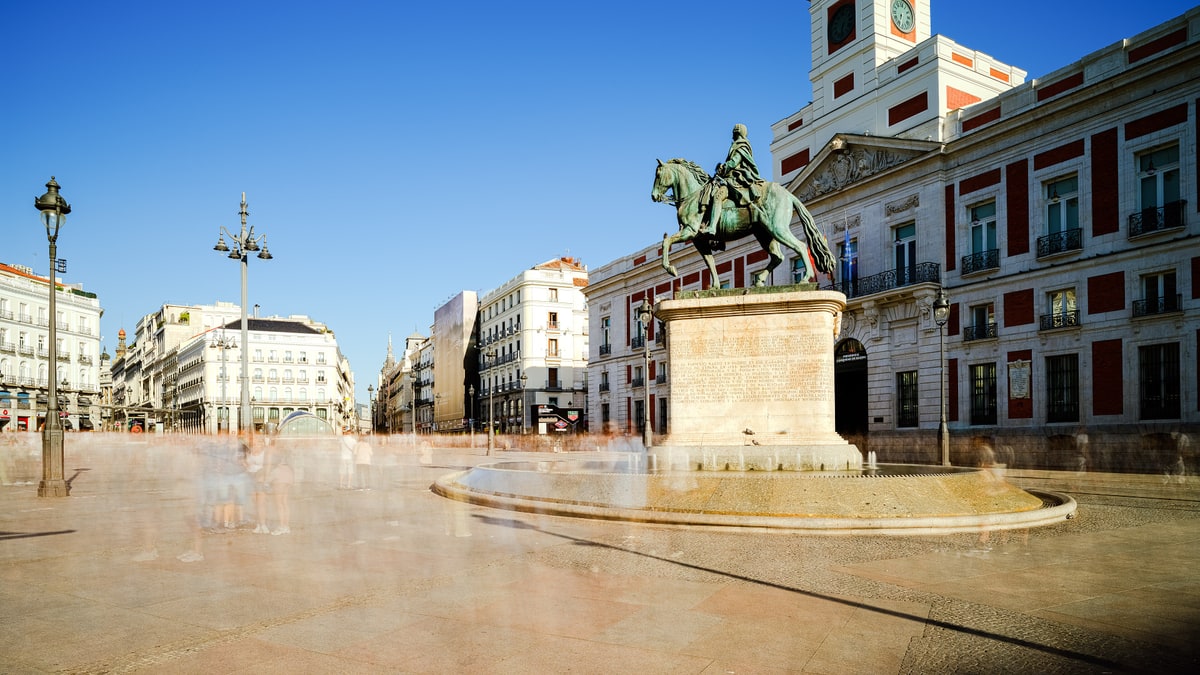
The main trade unions and tenant organisations called the strike to demand a response to the housing crisis, better wages, and public services.
According to politicargentina.com, Spain experienced its first general strike in 14 years this week, called by the main trade unions and tenant organisations. Participation in workplaces was uneven, but the day concluded with large demonstrations in Madrid, Barcelona, Valencia, and other cities.
Unlike previous general strikes focused on labour reforms or cuts, this time access to housing was one of the main driving forces. The Tenant Union brought the protest to workplaces with the support of Comisiones Obreras (CCOO) and the General Union of Workers (UGT).
According to the Government Delegation, around 120,000 people participated in the Madrid demonstration, although organisers reported much higher figures. In Barcelona, the Urban Guard counted about 55,000 people.
The Bank of Spain estimates that between 2021 and 2025, there was a deficit of nearly 750,000 homes, due to the difference between the formation of new households and the construction of new units. Madrid, Barcelona, Valencia, Alicante, and Málaga are where this gap is most pronounced.
Data from the National Institute of Statistics (INE) shows that housing prices rose by 12.2% year-on-year in the second quarter of 2026. Used homes increased by 12.9% and new ones by 7.4%.
In the rental market, the average price rose from 10.80 euros per square metre in December 2019 to 14.40 euros by the end of 2025, according to data from Idealista, an increase of over 33%. Wages grew at a considerably slower pace during the same period.
The problem particularly affects young people. In 2025, 67.1% of individuals aged 18 to 34 were still living with their parents. Among those aged 26 to 34 who had not moved out, 34.6% cited the economic impossibility of renting a home as the reason.
Tourist rentals and platforms like Airbnb are also targets of the protest, especially in Madrid, Barcelona, Málaga, and Seville, as they remove homes from the residential market. Nevertheless, the same source claims that this phenomenon does not solely explain the crisis, as the housing deficit far exceeds the impact of tourism.
The unions and tenant organisations are calling for an expansion of the public and affordable housing stock, mobilising vacant homes, limiting real estate speculation, and increasing wages. Unai Sordo, general secretary of CCOO, suggested the goal of having between 1.5 and 3 million homes available at affordable prices in Spain.
The call for the strike came after protests followed the eviction of a home in Madrid on September 23, which became a symbol of the housing crisis. This general strike is the first national call of its kind since November 2012. Alongside this week's strike, in addition to CCOO and UGT, CGT, CNT, the Intersindical Confederation, and Solidaridad Obrera also participated.
Early general elections will be held on November 29, and the campaign will begin just days after the strike, positioning housing as a central topic in the electoral debate.
Regarding the labour impact, CCOO and UGT stated that participation exceeded 80% in some activities and regions, while figures vary depending on the source consulted.

You may also like