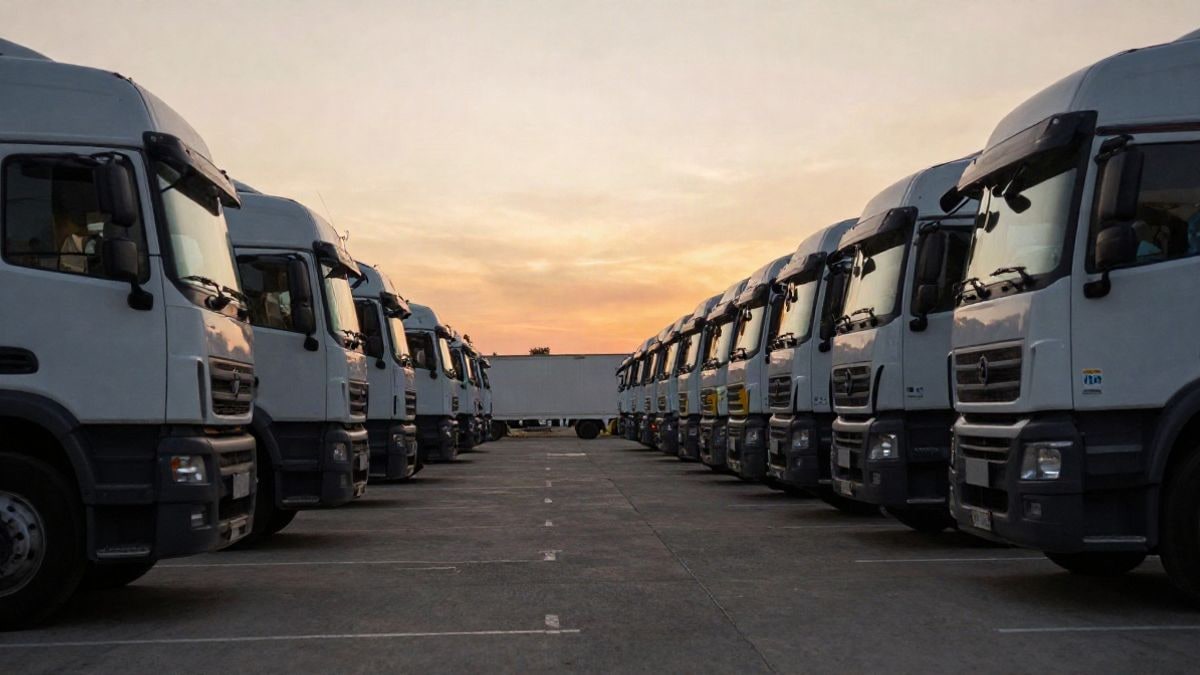
Of the €400 million plan to renew fleets, €362 million have been committed until August 2026. SMEs and freelancers have only purchased one electric or hydrogen truck with this aid.
The Aid Plan for the Sustainable Transformation of Heavy Vehicle Fleets, endowed with €400 million from Next Generation funds and approved at the end of 2021, has left a very uneven balance among transporters. As of 31 August 2026, the Ministry of Transport had committed €362 million of that three-year budget, according to an analysis published by diariodetransporte.com based on official data.
The majority of the money has gone to the scrappage line: €192.1 million to scrap 13,574 vehicles, with an average of €14,000 per truck. The purchase of new zero-emission vehicles (electric or hydrogen) has barely been embraced by SMEs and freelancers.
The main reason is the price. An electric or hydrogen truck costs two to three times more than an equivalent diesel, and the available supply in the heavy vehicle market is still very limited. The result: of the 418 trucks financed with this aid across Spain, 373 were battery electric (BEV), and the investment in this area barely reached €39 million, 30% of the planned budget. The remaining 70% was allocated to buses.
The distribution by company size shows a clear concentration. In the new truck acquisition line, large companies purchased 243 vehicles, almost all of the aid for zero emissions, despite representing only 1% of the road transport business fabric. Small companies acquired 126 trucks and freelancers, one single truck. In contrast, in the scrappage line, 80% of the beneficiaries were freelancers and small companies.
By subsectors, two out of three newly subsidised vehicles were buses, mainly hybrids and electric. The federation considers this proportion disproportionate given that the Spanish truck fleet is six times larger than that of buses.
"Only by allowing renewal with economically accessible technologies can the survival of SMEs in the sector be guaranteed"
The National Federation of Transport Associations of Spain (FENADISMER) calls on the Ministry of Transport and Sustainable Mobility for a comprehensive Renovation Plan that finances the purchase of vehicles with any technology, including the latest generation diesels. The employers' association argues that technological neutrality is the way to reduce emissions immediately and curb the ageing of the fleet.
This ageing is reflected in the data: the tractor units now average 8 years old, compared to 4.7 years in 2007, and rigid trucks reach 14.8 years, well above the 5.9 years of nearly two decades ago.
The three-year plan is already 90.5% executed and does not contemplate new calls under the current conditions. SMEs and freelancers wishing to renew their vehicles will have to wait for the Ministry to define the next lines of support, which are still without a date.

You may also like