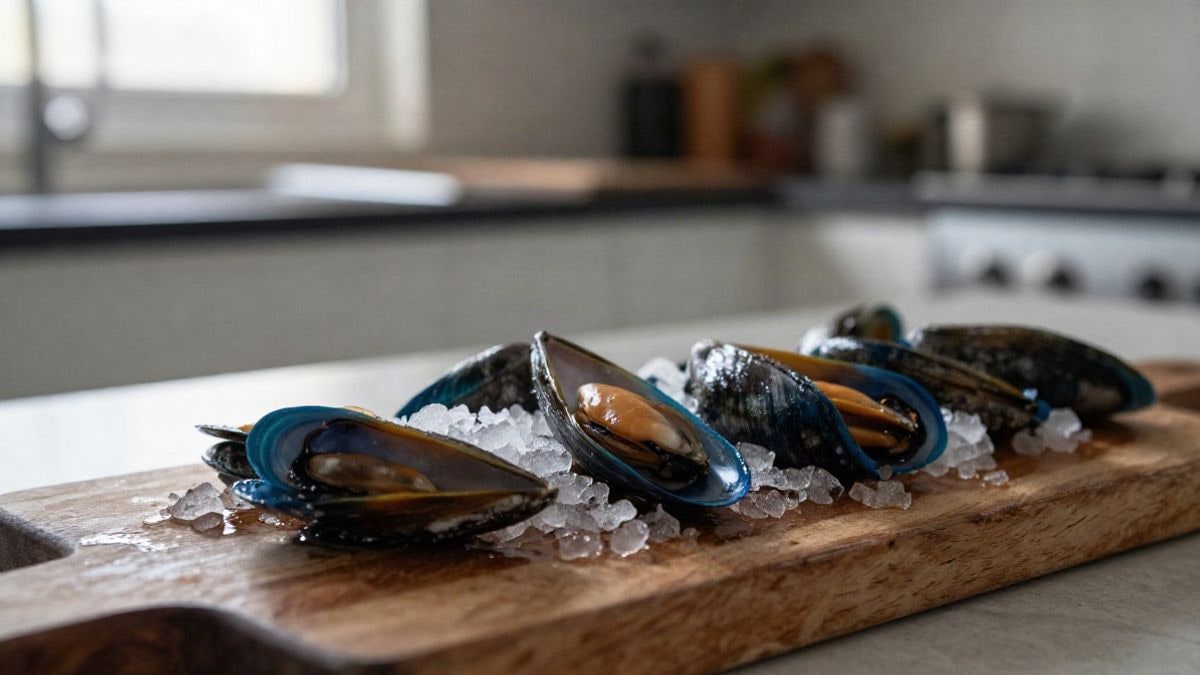
The Chilean startup AustralBites transforms mussels into nuggets, meatballs, and medallions, and is already marketing them in Chile. The company has surpassed US$3 million in sales.
The Chilean startup AustralBites converts mussels into nuggets, meatballs, and medallions, and is already selling them in Chile. According to Ecosistema Startup, the company was born in Chiloé, in the Los Lagos region, and reports sales of US$3 million.
The venture is based on a gap in the local market. Chile is the world's largest exporter of mussels, but its internal consumption of seafood products is 15 kilos per person per year, compared to 28 kilos in Spain and over 45 kilos in Japan.
The idea emerged as a spin-off from the Active Aging Program at the University of Chile, led by Guillermo Ariztía, a partner in the company. The initial goal was to create nutritious marine protein foods that are easy to consume and better accepted.
“We saw an opportunity to bring seafood products to more people through familiar and easy-to-prepare formats,” explains Matías Vial, co-founder and general manager of AustralBites.
The team chose mussels for their availability in Chile, traceability, and nutritional value. The products are high in protein, low in fat, and do not carry warning labels.
According to ProChile, the country is the second-largest producer of mussels in the world. Between January and June 2026, Chilean mussel exports totaled US$231 million, an 11.5% increase compared to the same period the previous year. Internal consumption, on the other hand, remains low, according to figures from the National Policy for Promoting the Consumption of Seafood Products presented by Subpesca in 2026.
AustralBites primarily targets children and the elderly, who often reject fish and seafood due to taste, texture, or difficulty in cooking.
The technical development required 23 formulation iterations alongside CETA Alimentos. The main obstacle was the low fat content of the protein, which complicates achieving an adequate consistency, as well as the potential presence of small shell particles and the adaptation of processes and machinery to transition from the laboratory to industrial production.
Two pilot programs linked to the School Feeding Program, involving over 800 students from the Los Lagos and Biobío regions, recorded an average acceptance rate of 80%, according to company data.
In Chile, the company markets its products through a partnership with Global Frozen, focused on national distribution and, above all, in the food service channel. Juan Sebastián Moreno, CEO of Global Frozen, highlights the complementarity between the two companies:
“There is a growing demand for foods that simplify work in professional kitchens today.”
AustralBites does not manufacture on its own: it works with producers and distributors, a model the company has chosen for growth.
You may also like