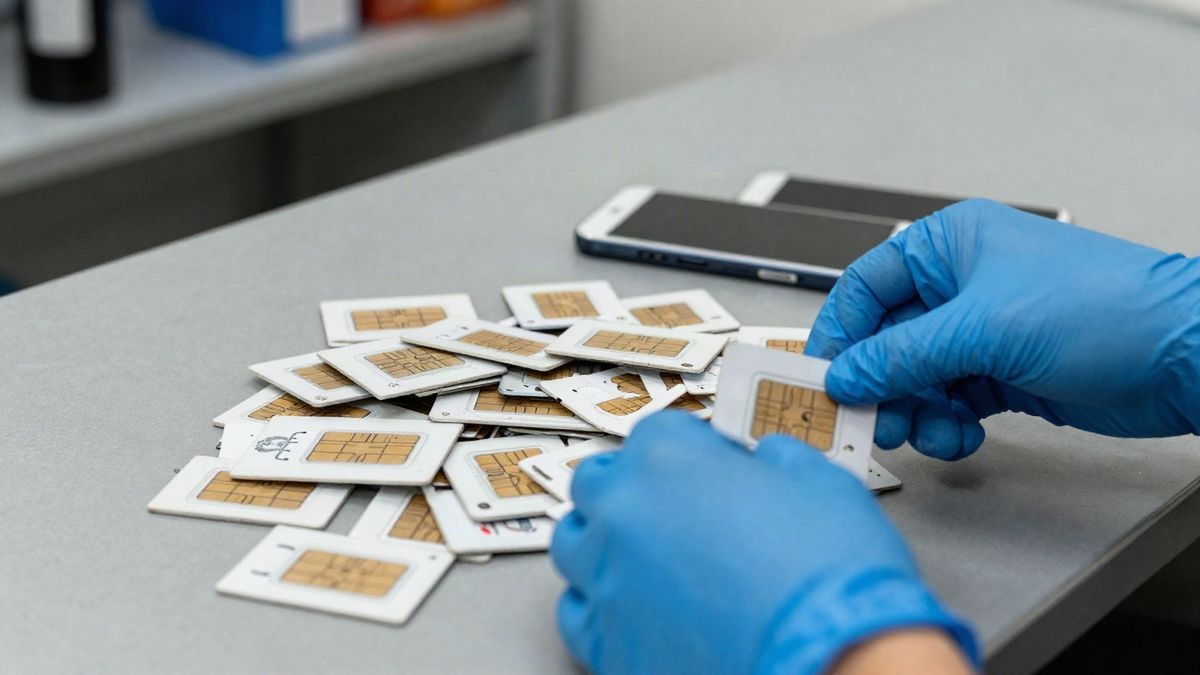
The Colombian government has charged five operators and Starlink for signals coming from its prisons. Among the cases is the Colombian subsidiary of Telefónica.
According to moncloa.com, the Colombian government has opened sanctioning processes against five telecommunications operators and against Starlink for the signals coming from the country's prisons. The Ministry of ICT has formally charged Comunicación Celular (Comcel), Colombia Telecomunicaciones, Partners Telecom Colombia, the Unión Temporal Colombia Móvil and Colombia Telecomunicaciones (Tigo), and Starlink Colombia.
The trigger was an operation at the La Picota prison in Bogotá, where 3,754 SIM cards, 582 phones, 38 modems, and six satellite antennas were seized. The Presidency of the Republic released the statement on November 21, 2026.
The obligation of the operators is not new. Article 16A of Law 65 of 1993, added by Law 1709 of 2014, requires them to mitigate, restrict, or eliminate transmission, reception, and control signals within penitentiary facilities. According to published information, these are the first formal processes opened in this way in twelve years.
The evidence comes from four prisons: La Picota, Las Heliconias (Florencia, Caquetá), Bellavista (Bello, Antioquia), and Acacías (Meta). The Monitoring and Inspection Center of the Ministry detected active Starlink wifi networks and mobile coverage in areas where it should not exist. The case examines whether there was a technical omission, not whether a crime was committed.
“Any SIM card used illegally from a prison must be deactivated and any unauthorized satellite connection restricted.”
This was stated by President Abelardo De La Espriella from his X account, where he added that anyone who fails to meet their obligations “must answer to the law.”
Colombia Telecomunicaciones is the Colombian subsidiary of Telefónica, which operates in the country under the Movistar brand. The Unión Temporal Colombia Móvil and Colombia Telecomunicaciones also appear on the list, meaning that two of the five cases affect the same Spanish company.
The companies may argue that blocking frequencies requires state authorization, that the interference affects nearby homes and hospitals, and that perimeter control is the responsibility of the state. The president reminded that the Inpec and the Ministry of Justice are also involved in the case.
For Telefónica, the case implies a potential economic sanction and the eventual obligation to install or finance blocking equipment in the areas where it operates. The source does not indicate timelines for resolving the processes or amounts of possible fines.

You may also like