The Government of Asturias has approved the temporary cession of part of the Perlora Holiday City to the Carreño Town Hall for five years, a first step to create green areas and improve access to the beach.
The Government of Asturias has approved the temporary cession of part of the Perlora Holiday City to the Carreño Town Hall for five years, as reported by cronista.com. The measure aims to enable green areas and improve access to the beach while the Special Protection and Internal Reform Plan is processed, which will organise the so-called New Perlora.
The cession was approved last June and represents the first step to reactivate a complex that has been closed since 2006. The rehabilitation of the buildings will come in a later phase, once the special plan is approved.
The Perlora Holiday City, located in the Asturian municipality of Carreño, between Gijón and Candás, was promoted in 1954 by the Franco regime through the Trade Union Work Education and Rest so that working-class families could holiday by the Cantabrian Sea. The complex occupied more than 20 hectares by the sea and functioned as an autonomous village: over 200 chalets, a collective residence, dining halls, sports facilities, shops, children's areas, a medical centre, a church, and a railway connection with Gijón.
Every fortnight, up to 2,000 people arrived, many of them employees of companies such as Hunosa, Ensidesa, or Renfe, who enjoyed subsidised holidays. Its peak period was experienced during the sixties and seventies. The ensemble, designed by brothers Francisco and Federico Somolinos as a garden city, mixed modern architecture with nods to Asturian tradition, such as a house shaped like a hórreo.
With the arrival of democracy, the complex passed to the Principality of Asturias in 1982 and entered a progressive decline that culminated in its closure in 2006. The impact extended beyond the workforce: bars, shops, and suppliers in the area largely depended on the arrival of holidaymakers.
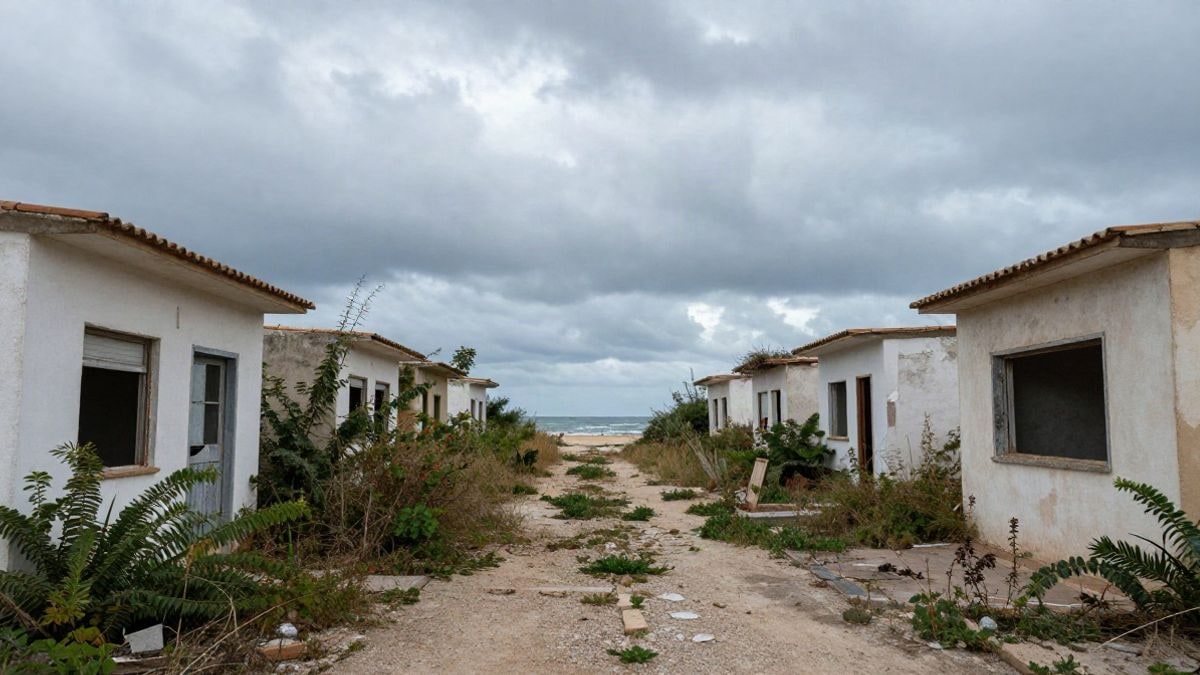
Since then, various projects to revitalise the site, including one that envisioned a luxury hotel and a conference centre, have not materialised. Nearly two decades later, weeds cover numerous buildings, broken windows and graffiti abound, and some properties have been declared in ruins. Nevertheless, the site continues to attract curious visitors, photographers, and former holidaymakers each summer who remember its years of glory.
Meanwhile, community groups, environmentalists, and unions are demanding that what remains standing be rehabilitated and that the site retains the public and social character with which it was born over seventy years ago.
The next milestone will be the processing of the Special Protection and Internal Reform Plan, which will define the future uses of the New Perlora. The cession to the Carreño Town Hall has a duration of five years.
You may also like