
The former Vice-President of the ECB links the rise in public debt rates with risks to financial stability due to high public and private debt. He also points to energy prices as a supply shock that hinders growth and raises inflation.
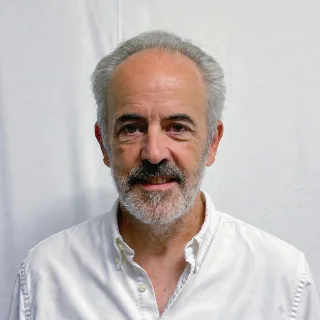
The former Vice-President of the European Central Bank (ECB), Luis de Guindos, has warned that the rise in interest rates on public debt poses significant risks to financial stability. He made this statement during a day focused on the challenges facing Spanish companies, organised by Nueva Mutua Sanitaria in collaboration with IESE Alumni, as reported by galiciapress.es.
In his speech, De Guindos explained that public debt rates have seen a notable rise, which generates relevant risks given the high level of both public and private debt and the valuations in financial markets. In his view, this is the context in which the Spanish economy will operate, facing challenges stemming from growth based on population increase, a housing market with significant distortions, and a deterioration of capital and public services.
“The rise in public debt rates poses significant risks to financial stability”
The former Vice-President of the ECB also linked the economic outlook for the eurozone with the evolution of the conflict in the Middle East. Specifically, he pointed out that the increase in energy prices constitutes a supply shock that reduces economic growth and raises inflation.
Regarding the rate hikes decided by the ECB, the US Federal Reserve, and the Bank of Japan, De Guindos indicated that they represent a tightening of monetary policy, although he focused on the rise in public debt rates, which he believes poses significant risks.
On the same day, the former president of the National Securities Market Commission (CNMV), Sebastián Albella, stated that the quality of the regulatory framework has become a variable of competitiveness. He added that in Europe, the concern for simplification and improvement of regulation is very visible and noted that Galicia has legal instruments to reduce and simplify the legal and regulatory framework, so that the reduction of regulatory and administrative barriers translates into greater economic dynamism and more agile and efficient management.
“The impact of hours not worked on the business fabric is no longer a temporary problem, but a structural crisis”
For his part, Martín Godino, managing partner of the firm Sagardoy Abogados, has described absenteeism as a structural crisis due to the impact of hours not worked on the business fabric. The day opened with the participation of the president of the Xunta de Galicia, Alfonso Rueda.
You may also like