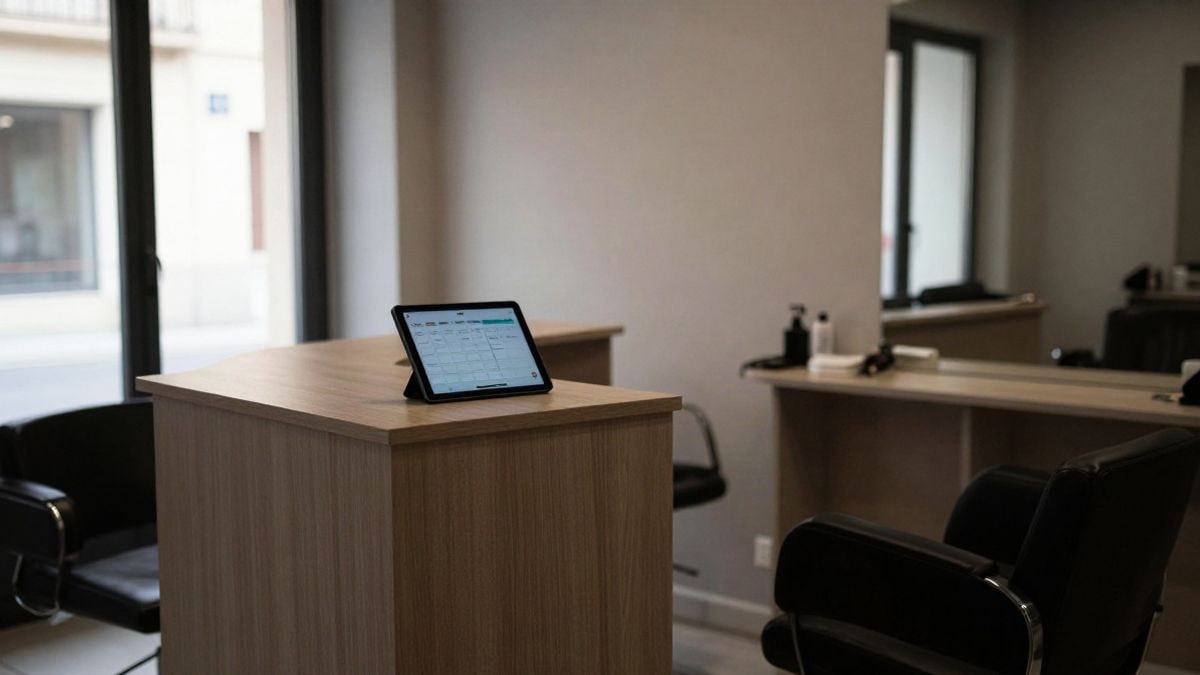
Automated reminders via SMS or WhatsApp reduce absences by up to 80% in service businesses. The digitalisation of bookings allows for capturing over 40% of appointments generated outside opening hours.
Appointment automation has become a key tool for service SMEs in Spain. According to sector data, automated reminders via SMS or WhatsApp reduce absences by up to 80%, and online booking systems allow for capturing over 40% of appointments generated outside opening hours. For hair salons, dental clinics, or beauty centres, this technology makes the difference between losing income or keeping the schedule full without the need to hire night staff.
The information, gathered by ecosistemastartup.com, indicates that in a local service market with tight margins and small teams, every missed call equates to a lost sale. Therefore, appointment management tools have become a basic infrastructure for thousands of small businesses in Spain, from beauty salons to professional consultations.
An appointment automation system includes calendar synchronisation with Google Calendar or Microsoft Outlook, multichannel capturing (own website, social media, local search profiles, and messaging) and payment gateways like Redsys, Bizum, or Stripe to collect deposits or the full amount at the time of booking. The entire process operates without human intervention.
The push for this digitalisation is not only operational but also regulatory. Verifactu, the electronic invoicing system derived from Law 11/2021 and regulated by Royal Decree 1007/2023, will require companies to adapt by 1 January 2027 and self-employed individuals by 1 July 2027. Although the Government approved a royal decree in December 2025 that delays the obligation by one year, penalties for non-compliance remain high: up to €150,000 for non-compliant software developers and €50,000 for end users for each fiscal year, as explained by Diario de Sevilla. The Ministry of Finance estimates that nearly 3.5 million taxpayers will need to adapt to the new system.
The global market for spa and salon software was valued at $1.6 billion in 2025 and is projected to reach $3.8 billion by 2033, according to BeautyMatter. Data from Square cited by the same source indicates that 34% of beauty businesses already offer memberships or subscriptions, with 85% reporting a positive return, and that 46% of bookings are generated outside the traditional hours of 9 am to 5 pm.
A relevant example for Spanish SMEs is Booksy, a booking platform founded in Poland in 2014 and actively present in Spain. According to Multiples.vc, Booksy was valued at $580 million in a secondary transaction in May 2023 and has raised $119 million in seven funding rounds, including a Series C of $70 million in January 2021 led by Cat Rock Capital. In October 2024, CIBC Innovation Banking provided additional growth capital without disclosing the amount.
For Spanish businesses, the decision is no longer whether to digitalise, but when to do so to avoid being left out of the market. Appointment automation allows for 24/7 availability without hiring a night receptionist, and with the Verifactu regulation around the corner, digitalisation becomes a competitive and legal requirement.
You may also like