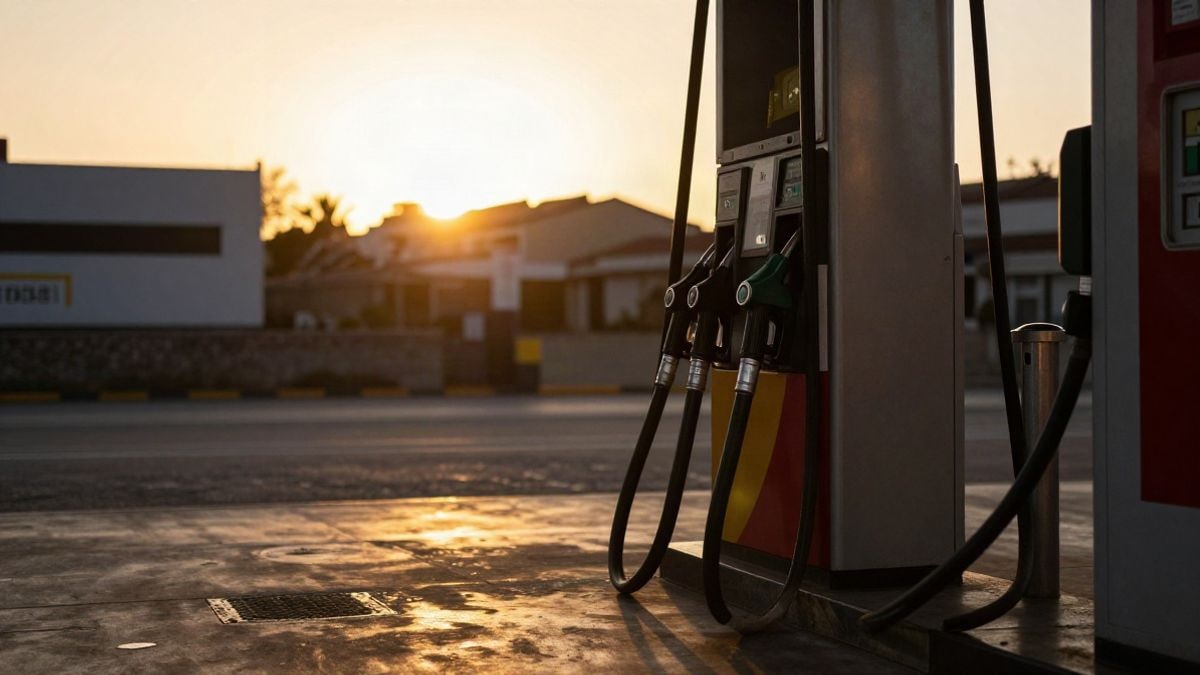
The governor of the Bank of Spain, José Luis Escrivá, states that the rise in energy prices is already affecting other components of inflation, although he dismisses second-round effects on wages. The agency estimates the accumulated housing supply deficit at 750,000 homes.
The governor of the Bank of Spain, José Luis Escrivá, indicated this Tuesday that the Spanish economy is beginning to show indirect effects of the rise in energy prices on inflation, although he specified that second-round effects on wages are not yet evident. He made this statement during his speech at the XVII Financial Meeting, organized by KPMG and Expansión, as reported by forbes.es.
"We are already starting to see indirect effects, not only in energy components but in other components as well," Escrivá stated, adding that the Bank of Spain will continue to monitor how this phenomenon evolves in the coming months. The governor refrained from commenting on what level of interest rates would be restrictive for the economy, considering that this would imply giving future guidance on monetary policy, something that the European Central Bank (ECB) wants to avoid.
"At certain thresholds, it is difficult to judge whether the policy is restrictive or accommodative"
Escrivá urged attention to the market interest rate curve, which in his opinion is being pushed upwards by the confluence of fiscal drifts with high debt levels, rising risk premiums, and strong demand for funds to invest in technologies associated with artificial intelligence.
The preliminary inflation figure released this Tuesday, which stood at 4.9% for September, according to Escrivá, is due to an energy component and how it is transmitted from the wholesale market to consumption. The governor emphasized the difference in the underlying data between Spain and the rest of Europe, which already exceeds one percentage point, attributing it to certain parts of the services sector, especially due to external tourism demand. Between January and July, Spain welcomed 58.1 million international tourists, an increase of 4.6%, with spending exceeding 82 billion euros, a rise of 7.8%.
When asked about the possibility of limiting mortgage approvals, a measure that the Bank of Spain is finalizing, Escrivá recalled that banks are maintaining a "reasonably prudent" behaviour and warned that a general restriction would have undesirable effects on young people and low-income individuals.
"This would have social and redistributive effects that we need to consider"
"For a measure of this type, we would need to be very precise," the governor emphasized, adding that it would be necessary to parameterize extensively to avoid generating undesirable effects from a measure justified from an aggregate perspective.
Regarding housing, Escrivá described the Spanish situation as "particularly acute" compared to other European countries in terms of accessibility and called for the coordination of all public administrations in the design of public policies. The agency estimates that in recent years there has been an accumulated deficit of 750,000 homes, a figure that could reach one million by 2028. The governor warned that, even if permits and processes are expedited, the construction sector does not have "sufficient strength" to significantly increase new housing, and he urged policymakers to avoid generating disincentives to supply.
You may also like