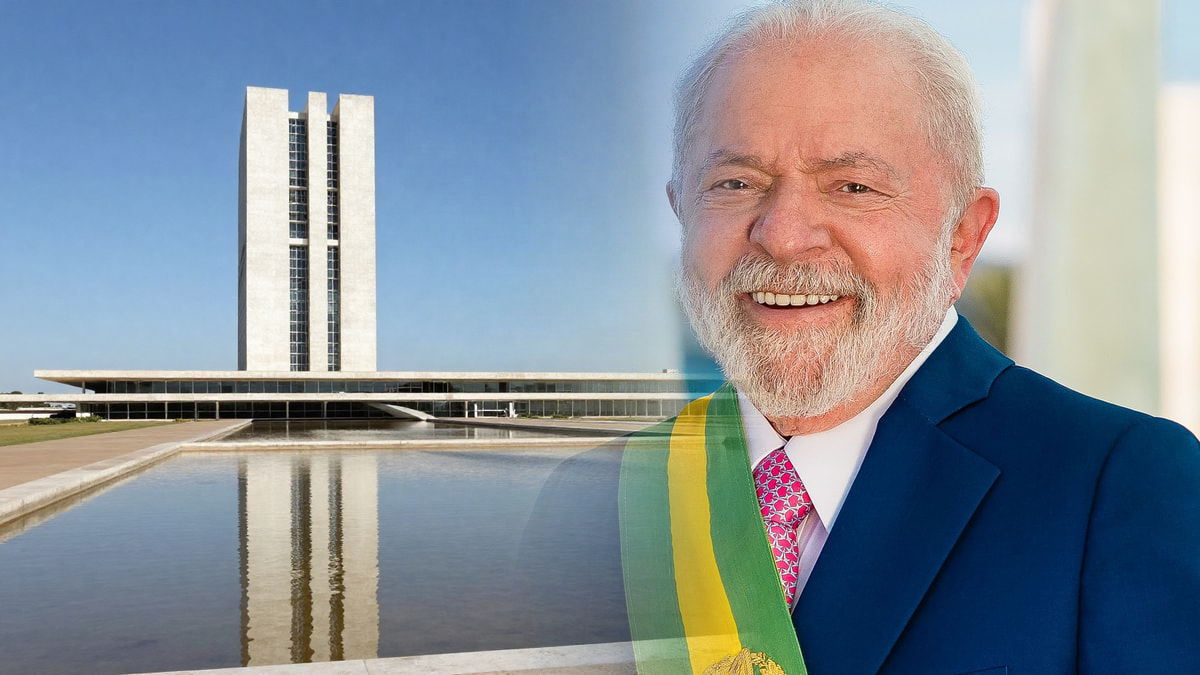
Lula da Silva revalidates the presidency of Brazil with 51.79% of the votes. Major Spanish companies operating in the country, such as Repsol, Telefónica, and Santander, are closely watching a Congress that will not make things easy for him.
According to moncloa.com, Lula da Silva has won the second round of the Brazilian elections with 51.79% of the votes against Flávio Bolsonaro. The president has thus closed the nearly two-point gap that separated him from his rival in the first round, held on October 4, when the Superior Electoral Court recorded 45.16% for Lula and 47.03% for Bolsonaro.
Lula will take office in January 2027. However, the new Congress poses an obstacle: the Liberal Party is the leading force in the Chamber of Deputies with 121 out of 513 seats, while the Workers' Party has 70 and, with its allies, 88. In the Senate, the PL has 29 seats, the PT 10, and the MDB 8.
The so-called Centrão, a bloc of pragmatic parties that controls more than half of the Chamber, negotiates each support in exchange for ministries, positions, and budget allocations. In April 2026, Congress overcame the presidential veto on the dosimetry law, which reduced the sentences of those convicted for the assault on January 8, 2023, including Jair Bolsonaro, who is serving 27 years in prison under house arrest for health reasons. The Supreme Court suspended the application of the law provisionally.
For Spanish companies, the key change is predictability. Repsol has one of its largest exploration and production positions in Brazil, Telefónica controls the mobile operator Vivo, and Banco Santander has a significant Brazilian subsidiary. A government with a hostile Congress will hardly dismantle the regulatory framework, but it will also struggle to push through the reforms that the markets were hoping for.
The result also impacts the trade agreement between the EU and Mercosur, whose ratification remains pending and requires a Brazilian Congress willing to support it. The Brazilian economy today relies less on the commodity cycle than during Lula's first terms from 2003 to 2011, when the major influx of Spanish companies into Latin America occurred.

You may also like