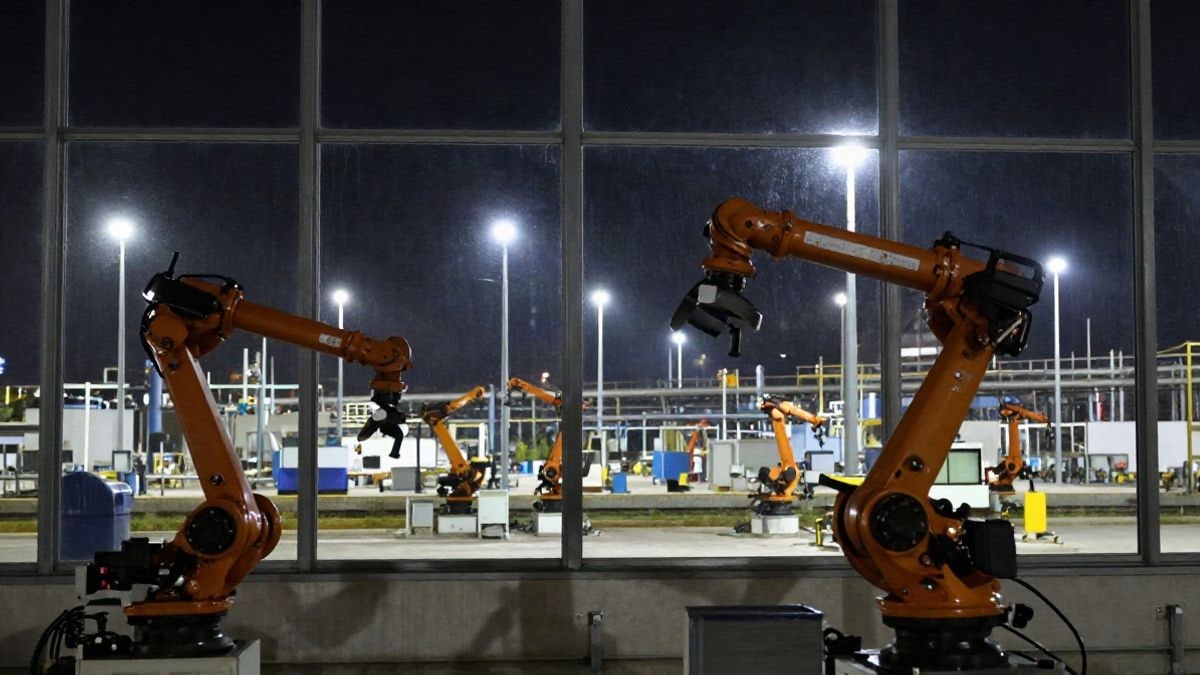
The Expo Potosí Industrial 2026 brought together NASCO, Integra Robotics, and CIDESI, who highlighted the automotive cluster and automation as attractions of the state, although without announcements of concrete investments.
The Expo Potosí Industrial 2026 celebrated a new edition in which representatives from NASCO, Integra Robotics, and the Centre for Engineering and Industrial Development (CIDESI) presented the reasons why San Luis Potosí remains a relevant destination for national and international industry, according to ecosistemastartup.com.
Francisco Martínez Escamilla, Vice President for Relations with Mexico at NASCO, focused on tangible factors such as the quality of facilities, the modernity of roadways, and local entrepreneurial initiatives as conditions for doing business in the state.
Meanwhile, Valente Torres, Sales Representative of Integra Robotics, showcased robots specialised in loading, security, and cleaning, adaptable to various productive sectors, and announced the company's intention to return to the next edition with updates for 2027.
"The company brought specialised robots for loading, security, and cleaning, equipment that can be adapted to different productive sectors"
Ariel Dorantes, a member of CIDESI, an organisation linked to the Secretariat of Science, Humanities, Technology and Innovation (Secihti), highlighted the automotive cluster and the connection between installed companies and the state's engineering centres.
The coverage of the meeting clarifies that the testimonies shared did not detail new investments, signed contracts, or specific projects announced during the exhibition. The expo served as a showcase of capabilities and a space for contact, not as a platform for capital announcements.
The industrial cycle does not move solely with megaprojects. It moves with supply relationships that are built twelve to eighteen months before the purchase order arrives. For a startup in automation, robotics, predictive maintenance, or industrial software, such an event is where the first meeting with a buyer is secured, who otherwise would never respond to a cold email.
The evidence that the format works is seen in other states: the Automotive & Aerospace Nearshoring Summit 2026 organised by MEXICONOW in Chihuahua brought together more than 150 exhibiting companies, 25 speakers, and nearly 2,000 B2B meetings over two days, according to Horsepower México.
Dorantes' argument about the cluster is not rhetorical. The BMW Group plant in San Luis Potosí will start production of the electric models BMW iX3 and BMW i3 in mid-2027, based on the Neue Klasse platform, as reported by Vanguardia Industrial in July 2026.
Behind that timeline lies an investment of 800 million euros announced in 2023 to expand the plant by 110,000 m², of which 80,000 m² correspond to the High Voltage Battery Assembly Centre. The operation has accumulated more than 2 billion dollars invested, 3,700 direct employees, and more than 32,000 indirect jobs in the region, according to the same publication.
The detail that should interest a supplier the most: BMW Group works with 310 supplier locations in Mexico. Part of that network did not originate from a large tender but from relationships built at fairs and industrial missions.
Any optimistic reading about San Luis Potosí should be contrasted with the national aggregate. The BBVA Research Manufacturing Monitor, published on September 21 and analysed by Siempre.mx, shows that the Multidimensional Manufacturing Indicator advanced 3.2% annually in August, practically mirroring the average of the first half (3.1%). It is not acceleration: it is a plateau.
The same analysis points out that spending on vehicles and auto parts in the United States fell 1.3% annually between July and August, according to data from the Bureau of Economic Analysis, and that Mexican manufacturing production had accumulated a 0.7% annual decline by July, with 17 of 21 subsectors below their January 2025 levels.
Automotive sector data confirms this direction. INEGI, through the Administrative Registry of the Automotive Industry of Light Vehicles and cited by Cluster Industrial, reported that Mexican production of light vehicles accumulated 2,946,943 units between January and September 2026, a variation of -2.4% compared to the same period in 2025. Only in September, the figure was 304,000 units, a -5.1% annual decrease.
The next edition of the Expo Potosí Industrial will be held in 2027, as announced by Integra Robotics during the event. Companies interested in participating can consult the guidelines on the official website of the event.

You may also like