Annual pension spending is around 200 billion euros, which is a third of the General State Budget, according to a Social Security official with over three decades in the sector.
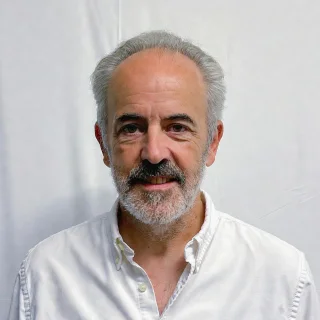
Annual pension spending stands at around 200 billion euros, that is, a third of the General State Budget. This is stated by Alfonso Muñoz, a Social Security official, in an interview published by ABC.
The conversation comes amid the pre-campaign for the 29N general elections. The left has attacked Alberto Núñez Feijóo and warns that a PP government would mean significant cuts to the welfare state. Muñoz rejects the idea that the system has an expiry date.
Muñoz passed the civil service exams in 1991 and chose a position at the National Institute of Social Security. He acknowledges that there is concern in society, but believes it existed when he started his career and argues that:
“the system has not only survived but has increased its capacity for protection”
Regarding those who repeat that the model is unsustainable, the official claims they speak without knowing it from the inside. He recalls that in 35 years, the end some predicted has not occurred, but rather an expansion of rights and benefits.
Muñoz identifies the main challenge as ageing. The number of pensioners is increasing, and one of the largest generations is approaching retirement, which he believes requires planning, decision-making, and political responsibility.
“The sustainability of the system depends on the decisions we make as a society. We must talk about income and expenditure”
The official advocates for strengthening the income that manages the system, although he does not rule out that expenditure is a serious problem. He warns that no income measure is sufficient on its own and that costs cannot be ignored.
“Pensions are not just any expense; they are a social right that protects millions of people after a lifetime of contributions and work”
Muñoz calls for rigor, transparency, and lasting agreements, expressing concern that the issue becomes an electoral tool: “I worry that this will turn into an electoral weapon.” According to his view, the debate should revolve around income, employment, contributions, and budget priorities.
You may also like