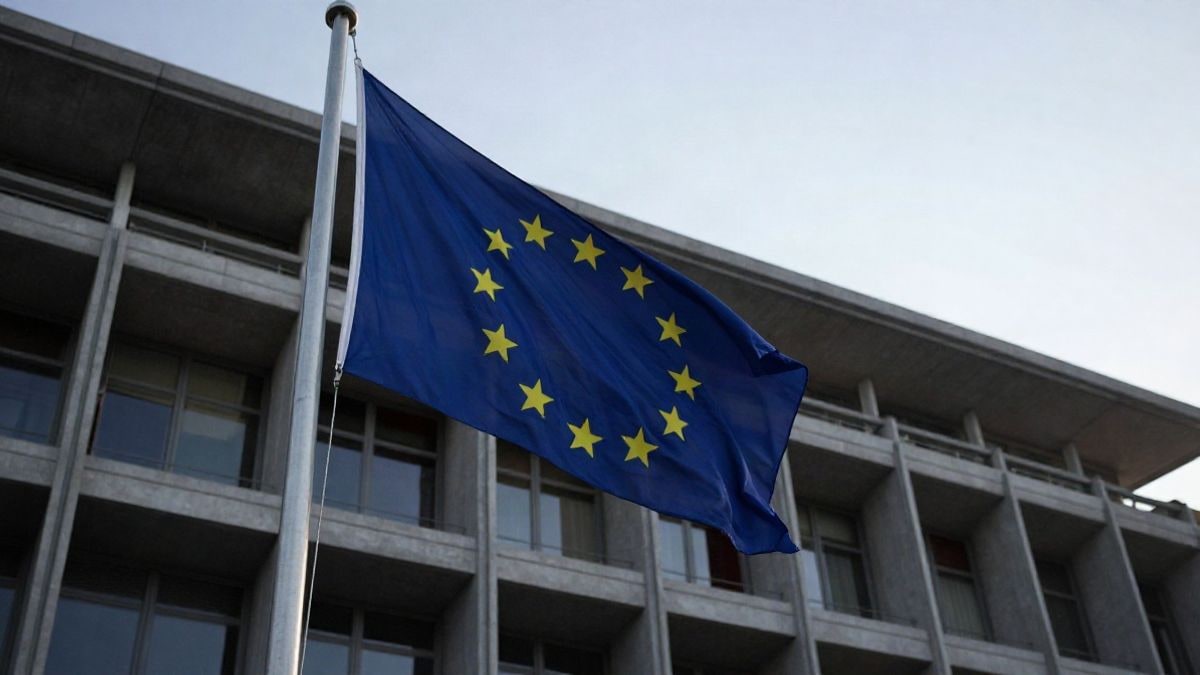
The Irish presidency of the Council proposes an 8% reduction in the EU financial framework, down to €1.62 trillion, with adjustments in competitiveness, defence, and external action. Agriculture and cohesion remain stable.
The Irish presidency of the EU Council has sent a proposal to the Twenty-Seven to cut €141 billion from the community budget for the period 2028-2034. This figure represents an adjustment of nearly 8% compared to the initial project of the European Commission and would leave the accounts at approximately €1.62 trillion, as reported by murciaeconomia.com.
The document, which is not yet an agreement, will serve as a new basis for negotiation among European governments and will require the consent of the European Parliament before it becomes the financial framework governing community spending for seven years.
The reduction applies to the budget designed by Brussels, which amounted to €1.76 trillion at constant 2025 prices, equivalent to about €1.98 trillion at current prices. The difference reflects the estimated effect of inflation during the budgetary period and is crucial for properly comparing both proposals.
The adjustment mainly affects policies related to competitiveness, innovation, security, defence, and foreign relations, areas that had gained particular prominence in the initial project of the European Commission. Brussels proposed to strengthen the Union's strategic autonomy and enhance its ability to compete with other major international economies, with investments aimed at research, new technologies, industry, digitalisation, and the development of defence capabilities, as well as funding for cooperation with third countries.
In contrast, traditional policies, especially those related to agriculture and regional development, would retain greater budgetary stability. According to the information released about the Irish document, the allocations for agriculture and regional funding would remain around €914 billion, while administrative spending would also experience an adjustment of nearly €9 billion.
The budget debate is particularly relevant for Spain and for autonomous communities such as the Region of Murcia, whose economy is closely linked to various policies funded by the European Union. The Common Agricultural Policy (CAP), cohesion funds, rural development aid, and programmes aimed at business innovation are important instruments for financing public and private projects.
In the Region of Murcia, these community tools impact sectors such as agriculture, the agri-food industry, the modernisation of farms, research, and infrastructure development. The European Commission's proposal for 2028-2034 also introduced a new funding model based on national and regional plans, with the aim of integrating various investment programmes and simplifying their management.
This redesign has sparked debate about the level of participation that autonomous communities will retain in the programming of the funds and about the distribution of resources among territories. Although the document presented by Ireland aims to preserve a significant portion of the allocations for agriculture and cohesion, it still does not allow for determining how much money will go to Spain or what specific allocation the Region of Murcia will receive.
The final amounts will depend on both the European budget agreement and the distribution rules and programmes that are subsequently approved.
The budget review comes after months of disagreements among member states about how much the Union should spend and how to finance its new priorities. Germany and other countries favouring greater fiscal discipline have called for a reduction in the figures initially proposed by the Commission, arguing that an increase in the budget would impose an excessive burden on national accounts.
Conversely, the President of the European Commission, Ursula von der Leyen, has defended the need to maintain a sufficiently ambitious budget to address the economic and geopolitical challenges of the coming years. On October 6, Von der Leyen warned before the European Parliament of the risks of implementing large cuts, especially when the Union aims to strengthen its competitiveness, accelerate the energy transition, and increase its capacity to respond to international crises.
Spain is among the countries that have supported the Commission's position. The Spanish government and another sixteen member states have defended the importance of maintaining community funding capable of addressing both new priorities and traditional policies.

You may also like


