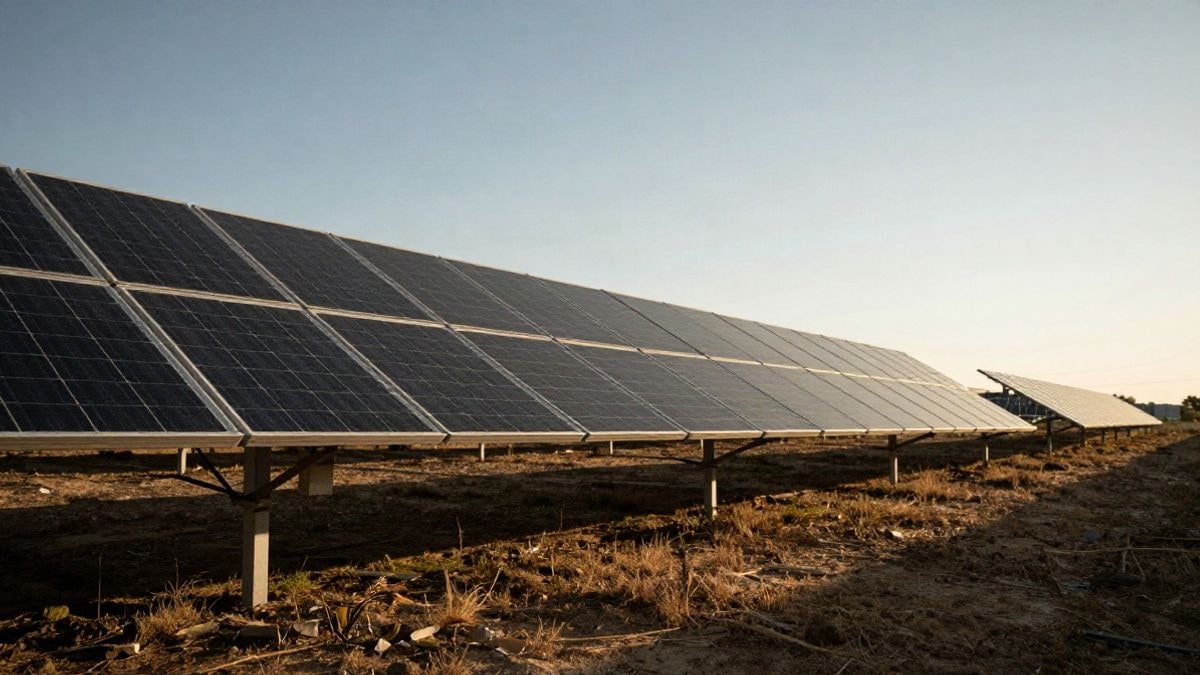
Global solar generation surpassed nuclear in April 2025, according to the WNISR 2026 report. Solar capacity reached 2,383 GW, compared to 399.5 GW for nuclear.
According to Ecosistema Startup, global solar generation exceeded nuclear electricity production for the first time in April 2025 in a single month. This data is included in the World Nuclear Industry Status Report (WNISR) 2026, coordinated by French consultant Mycle Schneider.
The report adds that wind power had already surpassed nuclear in March 2025. Between March 2025 and June 2026, either solar or wind, each separately, generated more electricity than nuclear every month, and in March, April, and May 2026, both did so independently.
Global solar capacity grew 510 GW to 2,383 GW in 2025, an increase of 27% compared to the previous year. Wind power added 159 GW to 1,291 GW, a record, with a 14% increase. Installed nuclear capacity rose 1.5 GW to 399.5 GW, while operational capacity fell by 0.5 GW to 368.6 GW. The report notes that nuclear capacity has been practically stagnant for over 25 years.
According to data from IEA PVPS cited in the report, photovoltaic installations in 2025 were around 690 GW, about 180 GW more than the WNISR estimate. If this figure is correct, the difference with nuclear would be even greater.
In terms of generation, the global nuclear fleet produced 2,703 TWh in 2025, an increase of 1.1%, while solar grew by 30% and surpassed nuclear's annual electricity production for the first time. Nuclear's share of global electricity fell to 8.8%, its lowest level in four and a half decades, compared to 17.5% in 1996.
Schneider attributes the situation of nuclear to its growth rates rather than technology. As an example, he cites that the American company Holtec postponed its IPO days before the expected listing, with which it hoped to raise nearly US$1 billion. Meanwhile, Fermi lost nearly 80% of its stock market value since its debut in October 2025.
In 2025, four reactors were started and seven were closed, marking the first negative annual balance since 2021. Between 2006 and 2025, 104 reactors were commissioned and 106 were shut down. China accounted for 53 of the new starts and no closures.
The report identifies the decline in battery costs as a key factor for continued solar growth, especially when grids absorb daytime surpluses. In 2025, 104 GW and 257 GWh of grid-scale storage were connected, and more than 78% of the accumulated capacity of BESS systems was installed between 2023 and 2025. According to ResearchAndMarkets, the global BESS market will grow from US$74.6 billion in 2026 to US$170.1 billion in 2033.
One cited case is Pakistan, which generated 36.3 TWh from solar in 2025 compared to 22.5 TWh from nuclear. Solar grew by nearly 85% that year and accounts for about 21.6% of its total electricity. The country imported over 58 GW of Chinese panels between 2017 and mid-2026, much of which is privately owned and installed on rooftops and industrial plants, outside the state grid.

You may also like