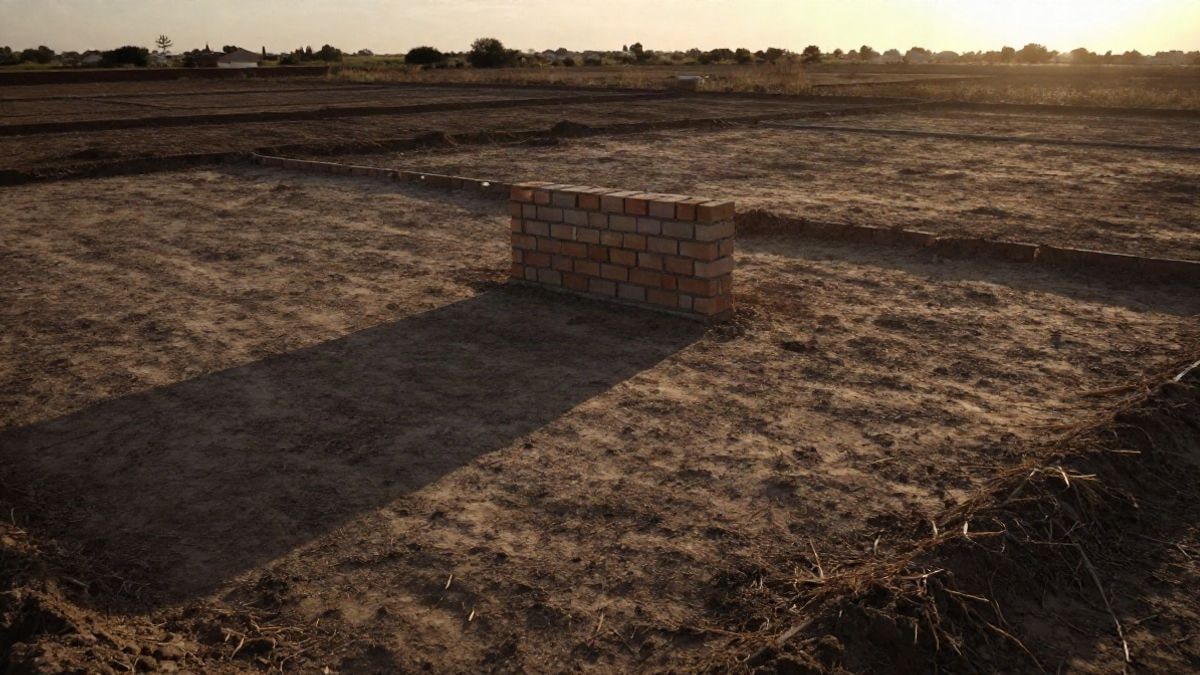
The Bank of Spain estimates that around 750,000 homes are needed to meet accumulated demand. It warns that the deficit could reach one million properties by 2030 if current demographic trends continue.
The Bank of Spain estimates that around 750,000 homes are needed to meet accumulated demand in Spain, according to mundiario.com. The agency warns that the deficit could reach one million properties by 2030 if current demographic trends persist.
The problem cannot be solved merely by constructing buildings. The shortage of labour, lengthy urban planning procedures, and difficulties in attracting investment limit construction capacity. Moreover, producing more homes will not suffice if they are not located where they are needed or if their prices remain out of reach for a large part of the population.
The pressure is not uniform across the territory. Murcia, Canary Islands, and the Valencian Community are among the regions that have accumulated the most residential needs in the last five years. Madrid and Catalonia also show a persistent imbalance between the creation of homes and the construction of new houses.
Location is as important as volume. Building far from workplaces, services, and public transport may reduce land costs, but it shifts the burden to families' daily commutes. One alternative is to utilise existing cities with taller buildings and compact neighbourhoods, and to adapt the size of homes to current income levels. 50 or 60 square metre flats could become more popular compared to larger spaces, although this requires a review of urban planning regulations.
The construction sector currently has less than 1.5 million workers, compared to the 2.7 million it had during the property boom. Development companies are calling for sufficient funding and regulatory certainty, and they warn of the weakening of numerous contracting SMEs, which are essential for executing the works.
Administrative timelines are another bottleneck. According to the National Confederation of Construction, a development project can take between eight and fifteen years.
To accelerate supply, the text suggests recovering some of the vacant homes through renovations and mobilising public properties. The biggest challenge is ensuring that a significant portion of new developments is affordable, which may require funding, land, or public participation.

You may also like