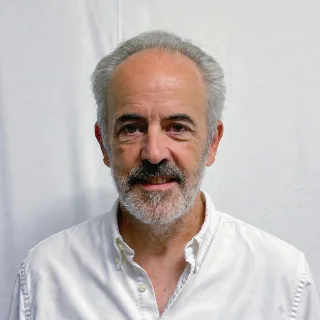
Ignasi Belda, director of the DELTA department at the Bank of Spain, argues that artificial intelligence will follow the pattern of the electric motor: first a drop in productivity and then exponential growth.
The Bank of Spain maintains that artificial intelligence will initially cause a decline in productivity and then an exponential increase, a pattern already seen with other technological revolutions. This was explained by Ignasi Belda, director of the Experimentation and Applied Technologies Laboratory (DELTA) at the supervisory body, during a breakfast organised by the CEDE Foundation and Foment del Treball, as reported by Crónica Global.
To illustrate this lag, Belda referred to a historical example: old factories operated with boilers that provided energy to the entire plant, and machines were placed according to the arrival of that energy, not according to the logical order of production. When the electric motor appeared, productivity did not increase radically; the leap came when someone realised that the plant could be reorganised according to the workflow.
According to Belda, the same pattern is repeating with AI. Many companies invest heavily in equipping their employees with tools, when what is needed is to redistribute production processes so that AI can provide its maximum value.
"What used to require a week of work from several people is now done in seconds"
The executive also warned of the risks of not doing it correctly. If employees are not "empowered" properly, there is a risk that they will use a tool that the company does not control. With a European AI regulation already requiring certain practices, he added, the company could be exposed.
Belda explained that DELTA was born from a vision of the governor of the Bank of Spain, José Luis Escrivá, to introduce AI throughout the institution. Based in Barcelona, it is a centre of excellence that brings together data scientists to understand the processes of a central bank and gradually replace them with AI systems.
The director of DELTA, who worked for two years at the Spanish Agency for the Supervision of Artificial Intelligence (AESIA), recalled that the European AI regulation came into effect in August 2024 and that the supervisor helps companies adapt to these changes.
When asked about the tasks that AI should take on and those that should remain with humans, Belda pointed out that there should always be a person at the Bank of Spain who signs or makes the decision and is ultimately responsible for each matter.
Regarding the impact on the banking sector, he described it as "brutal" and explained that all banks are already incorporating AI throughout the value chain, from personnel management to credit, risk, or monetary policy.
Belda added that DELTA is committed to Catalonia because of the richness of its ecosystem and wants to grow in Barcelona, where its headquarters is located in Plaza Catalunya.
You may also like