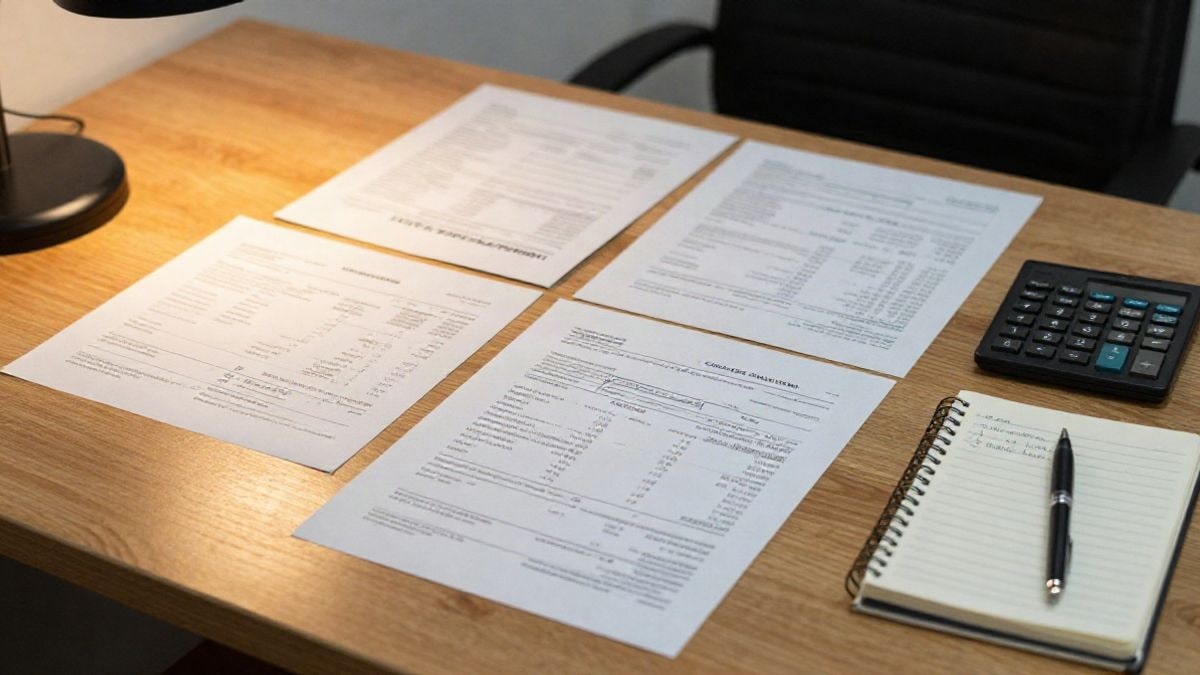
Deductible self-employed expenses represent one of the most important tools for optimising your tax return and reducing your tax burden. Any self-employed worker can deduct from their gross income the necessary expenses to carry out their activity, provided they meet legal requirements and have the appropriate documentation.
The deductibility of expenses is a right recognised by the Tax Agency. When declaring, not only the income you have obtained counts, but also all legitimate costs incurred to generate them. This difference between income and expenses defines your taxable base, that is, the amount on which you will ultimately pay taxes.
For an expense to be deductible, it must meet two fundamental conditions: first, it must be directly related to the professional activity you carry out; second, it must have documentation to justify it (invoices, receipts, tickets). The Tax Agency may request proof of any declared expense, so keeping receipts during the statute of limitations is mandatory.
Operating and Supply Expenses
Among the most common deductible self-employed expenses are those for the daily operation of the activity. This includes the rent of the premises or space where you work, services for water, electricity, gas, and internet, as well as the mobile or landline phone you use for professional matters. If you work from home, you can deduct a proportional part of these expenses, although the Tax Agency usually applies restrictive criteria regarding the habitual residence.
Office supplies are also fully deductible: paper, ink, stationery, specific work uniforms, or protective clothing. Likewise, expenses for maintenance and repair of equipment, machines, or tools that you use directly in your activity can be deducted from your income.
Subscriptions to platforms or software necessary for your work are deductible, as well as web hosting or domain fees if you have an online page. Hosting expenses, web development, or business management applications fall into this category as long as they are linked to your professional activity.
Personnel and Outsourcing Expenses
If you hire employees, salaries and social security contributions are fully deductible expenses. Similarly, if you pay other self-employed individuals or professionals to assist you in your work (freelancers, service providers), those expenses can be deducted, provided you have the corresponding invoices.
Any outsourcing or external service expenses fall into this category: from cleaners to accounting firms, including graphic designers or consultants. The important thing is that the expense is documented and necessary for your activity.
Transport, Travel, and Commuting
Transport expenses related to your professional activity are deductible. This includes fuel, tolls, parking, and maintenance of your vehicle if you use it for work. Many self-employed individuals choose to apply a deductibility coefficient: if your car is partially for business, you can only deduct the proportional part.
Business travel also falls into this category: plane or train tickets, hotel stays, meals during professional trips. Each expense must be justified and have a clear connection to your activity. Transport tickets, hotel bookings, and restaurant receipts are documents you must keep.
Daily urban transport (bus, metro) is more difficult to deduct if it is simply commuting to work, but you can deduct it if you use taxi or ride-sharing services for specific professional trips.
Training and Professional Development
Courses, master's degrees, and professional training related to your sector are deductible expenses. Specialised books, professional magazines, subscriptions to educational platforms, attendance at conferences or seminars in the business field: all of this reduces your taxable base.
The Tax Agency understands that continuous training is necessary to maintain competitiveness in your sector. You must keep receipts for tuition, invoices from educational platforms, or documents proving your attendance.
Advertising and Marketing Expenses
Any investment in promoting your business is deductible. From advertising on social media to creating promotional material, including campaigns on Google Ads, newsletters, or printed brochures. If you pay a marketing agency, that invoice is a deductible expense.
The design of logos, business cards, catalogues, or any corporate material falls into this category. Even expenses for SEO, web positioning, or social media management are completely deductible.
Insurance and Financial Expenses
Professional liability insurance, accident insurance, or any other policy linked to your activity is deductible. Likewise, interest expenses on loans used for professional activity can be deducted, although not the capital repaid.
Bank fees, management expenses for business accounts, or processing fees for card payments are also deductible. If you hire legal or accounting advisory services, those expenses reduce your taxable base.
Depreciation of Equipment
Durable goods purchased for your business (computers, furniture, machines) are deducted through depreciation, not all at once. The Tax Agency establishes depreciation periods according to the type of asset: a computer typically depreciates over 4 years, while office furniture may do so over 10.
This means you cannot deduct the total cost in the year you purchase the asset, but rather distribute that deduction over the years according to the percentages set by law.
What is NOT Deductible
There are expenses that can never be deductible. The social security contribution as a self-employed person cannot be deducted (it is discounted through another system). Personal or private use expenses, traffic fines or penalties, and direct taxes such as personal income tax (IRPF) generated are also not deductible.
Gifts to clients have limitations: you can only deduct up to 150 euros per client per year. Expenses for personal clothing (even if for work) are generally not deductible unless it is a specific uniform for the sector.
How to Properly Document Your Expenses
The key for your deductible self-employed expenses to be valid during an inspection is documentation. Each expense must have its proof: invoice, receipt, or ticket indicating the concept, the amount paid, the date, and the provider or entity.
It is advisable to keep an organised record of all your expenses: a spreadsheet, accounting software, or the services of an advisor. Many mobile applications allow you to photograph receipts on the go. Keep the originals for at least the four years of the statute of limitations established by the Tax Agency.
If you use online services without receiving a physical invoice, download the receipt or payment proof generated by the platform. If you pay in cash, always ask for a receipt, even if it is small.
Maximising your deductible self-employed expenses is not tax evasion; it is legitimate tax optimisation. Knowing what expenses are allowed and keeping them well documented can make a significant difference in your tax return, allowing you to retain more profits in your business.

You may also like