When asked what the CPI is, the short answer is this: the Consumer Price Index measures how the cost of the basket of goods and services that families regularly purchase changes over time. It is the indicator mentioned in news broadcasts when it is said that "prices have risen by a certain percentage," and its reading affects salaries, rents, and pensions. Although it sounds technical, its logic is simple: it compares how much the same items cost today versus a few months or a year ago.
What it measures exactly
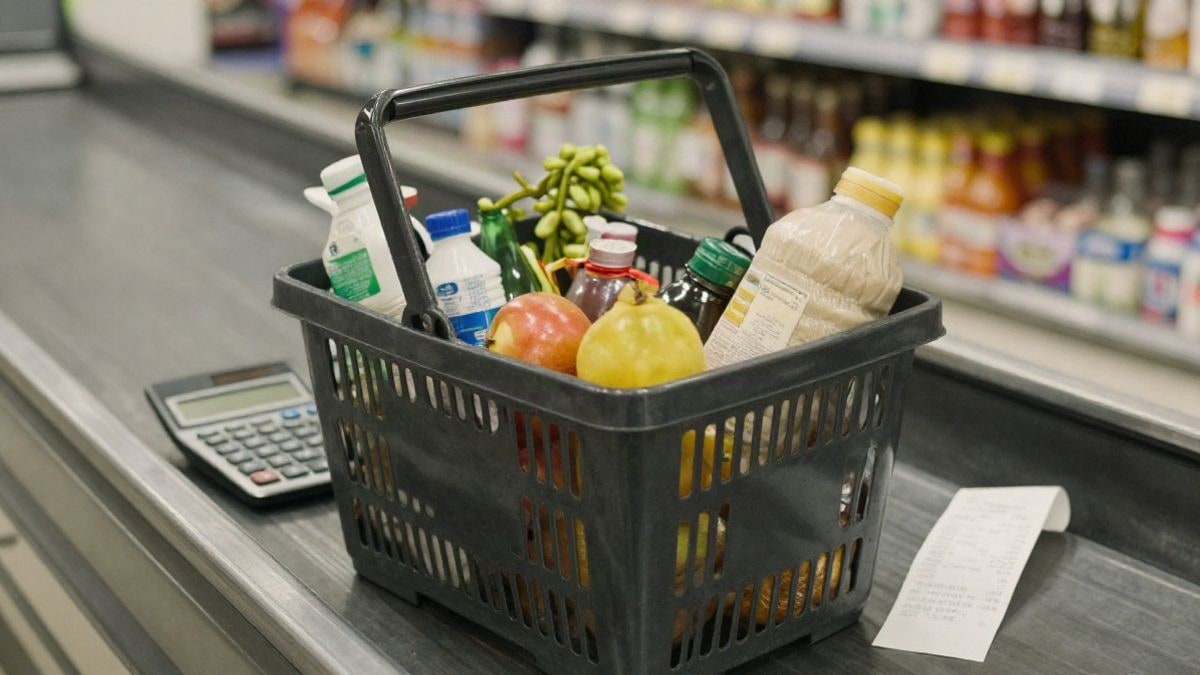
The CPI collects prices from a wide variety of goods and services that are part of everyday life: food, clothing, transport, housing, education, leisure, or utilities such as electricity. It is not a randomly chosen list of products, but a selection that represents the spending of Spanish households. Therefore, the index does not indicate how much a specific product has increased in price, but rather how the overall family budget has changed.
This basket is reviewed and updated to reflect how the population consumes. Prices are collected periodically, from thousands of establishments and for numerous services, and then compared with those from a reference period. The result is expressed as a percentage change, which is the figure that appears in the news.
How it is calculated
The calculation starts from a base year or period, which is given a reference value, and compares the cost of that basket at the current moment. If the cost rises, the index rises; if it falls, the index falls. The monthly variation compares one month with the same month of the previous year, or with the immediately preceding month, depending on the data being analysed, so it is always important to pay attention to which reference each news item uses.
An important nuance: the CPI is not the same as the cost of living in the strict sense. It measures the evolution of prices of an average basket, but each household consumes differently. A family that spends a lot on energy may notice price increases that are very different from what the general index reflects.
What it is used for
The most visible use of the CPI is in the daily life of contracts. In some labour agreements, salaries are reviewed according to the evolution of the index so that purchasing power is not affected. If the CPI rises by 2%, a salary of 2,000 euros that is not updated will lose, in real terms, that same proportion of purchasing power.
In the case of rents, the situation has changed in recent years. Previously, many contracts were directly linked to the CPI, but now the rents of housing contracts are updated according to the Competitiveness Guarantee Index (IGC). This index uses the inflation of the eurozone measured by the Harmonised Consumer Price Index as a reference, but discounts part of the loss of competitiveness accumulated by Spain since 1999. If its variation is below zero, a non-revision of the rent is applied as a reference, and if it exceeds the inflation target of the European Central Bank, which is 2%, that value is taken as the reference cap.
A simple example helps to illustrate this. If an apartment is rented for 800 euros per month and the applicable index rises by 1.5% in the last year, the rent would increase to 812 euros per month. It may seem small, but it accumulates year after year, which is why tenants and landlords often pay close attention to the data.
Pensions are another area where the index has weight. In Spain, pensions are adjusted according to the CPI so that pensioners do not lose purchasing power against the general rise in prices. Therefore, when the index skyrockets, the debate about public spending and the sustainability of the system returns to the headlines.
Inflation and deflation: when it rises and when it falls
When the CPI rises generally and sustainably, it is referred to as inflation. This means that prices become more expensive and that, with the same amount of money, fewer things can be bought than in the previous month or year. If 300 euros were needed for the monthly shopping and the index rises by 1%, the same basket will cost 303 euros.
The opposite case is deflation, a generalized and persistent decrease in prices. At first glance, this may seem like good news because purchases cost less, but it is not necessarily so. If prices fall broadly, companies earn less, may reduce staff or investments, and the economy as a whole suffers. That is why economists distinguish between a one-off decrease in some prices and a deflationary process that affects overall activity.
It is important not to confuse the general index with the evolution of a single product. That gasoline drops in price in one week does not mean that the CPI is falling, and that electricity rises temporarily does not imply a long-term trend. The data that weighs in decisions is the trend of the complete basket over several months.
What it means for your wallet
For an individual, the CPI translates into a very specific question: how much does it cost to maintain the same standard of living? If the index rises and incomes do not rise at the same rate, purchasing power decreases. If it rises little or even falls, life becomes somewhat more affordable, although salaries may also stagnate.
For a small business or a self-employed person, the index serves as a thermometer. It allows them to calculate whether selling prices need to be reviewed, anticipate rising costs from suppliers and rents, and negotiate better with clients and entities. An executive or manager who understands how the CPI is constructed has more tools to interpret the data published by the National Statistics Institute and other bodies.
In short, what the CPI is can be summarised as an indicator that translates into a percentage what happens to the prices of daily life. Its usefulness lies in comparing, over time, how much the same items cost, and serving as a reference for salaries, rents, and pensions.

You may also like