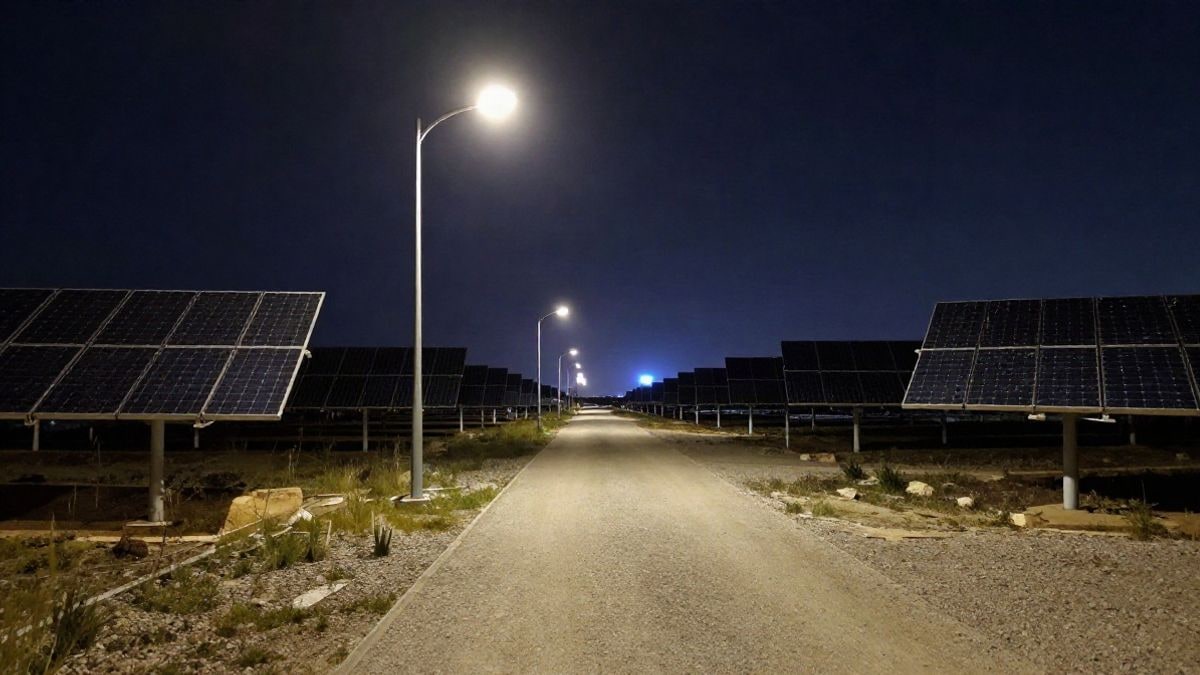
Nearly half of the renewable projects planned in Spain do not materialise because electricity costs less and less during peak solar production hours.
According to ecosistemastartup.com, one in two renewable projects in Spain fails to launch. The problem lies not in a lack of sunlight or funding, but in the fact that the electricity produced by these plants is increasingly paid less during the hours they generate.
The phenomenon affects two opposing profiles. For those developing or financing generation, the business model becomes complicated. For companies that consume a lot of energy, such as industry, logistics, or data centres, the same situation opens a pathway for cost savings.
In the wholesale market, prices are set hour by hour according to supply and demand. When there is a lot of renewable generation and low demand, offers drop to zero and, at times, to negative values. A negative price means that selling can incur a cost for the producer, although not all installations lose money during those hours, as it depends on their contracts and remuneration model.
Spain led Europe in hours with negative prices during the second quarter of 2026, with 596 hours, ahead of Portugal (462), France (370), and Greece (317). The jump compared to the beginning of the year is notable: between January and March, 397 hours with negative prices were recorded, compared to 48 hours in the same period the previous year.
The same markets that register negative prices at noon reach peaks above 100 €/MWh during high demand hours. The system, according to the cited analysis, lacks sufficient flexibility to absorb these extremes.
During the hours of highest solar production, wholesale prices frequently fall below 30 €/MWh, a level that reduces the profitability of installations. Some companies are withdrawing projects that they already had licensed because the expected revenues upon operation are uncertain.
In terms of capacity, only 34,200 MW of the 280,400 MW projected in Spain have been put into operation. In the Valencian Community, of about 4.5 billion euros of planned investment, it is estimated that between 800 and 1,000 million will be operational in the next two years. Some owners have already halted their activities due to falling profits.
For a small or medium-sized enterprise (SME) or a startup that consumes electricity, the reading is different. The association UNEF estimates that photovoltaics have generated savings of 17.021 billion euros for Spanish consumers between January 2025 and June 2026, with an average daily price of 60.2 €/MWh compared to 112 €/MWh that would have been recorded without solar energy.
Companies with flexible consumption, such as heating, cooling, fleet charging, or batch processes, can shift part of their consumption to the central hours of the day when electricity is cheaper. It is advisable to review the bill against the hourly prices of the daily market, as the hours with less sun are the most expensive. Before signing an energy purchase contract, it is also recommended to demand an explicit assumption about the capture price of generation.

You may also like