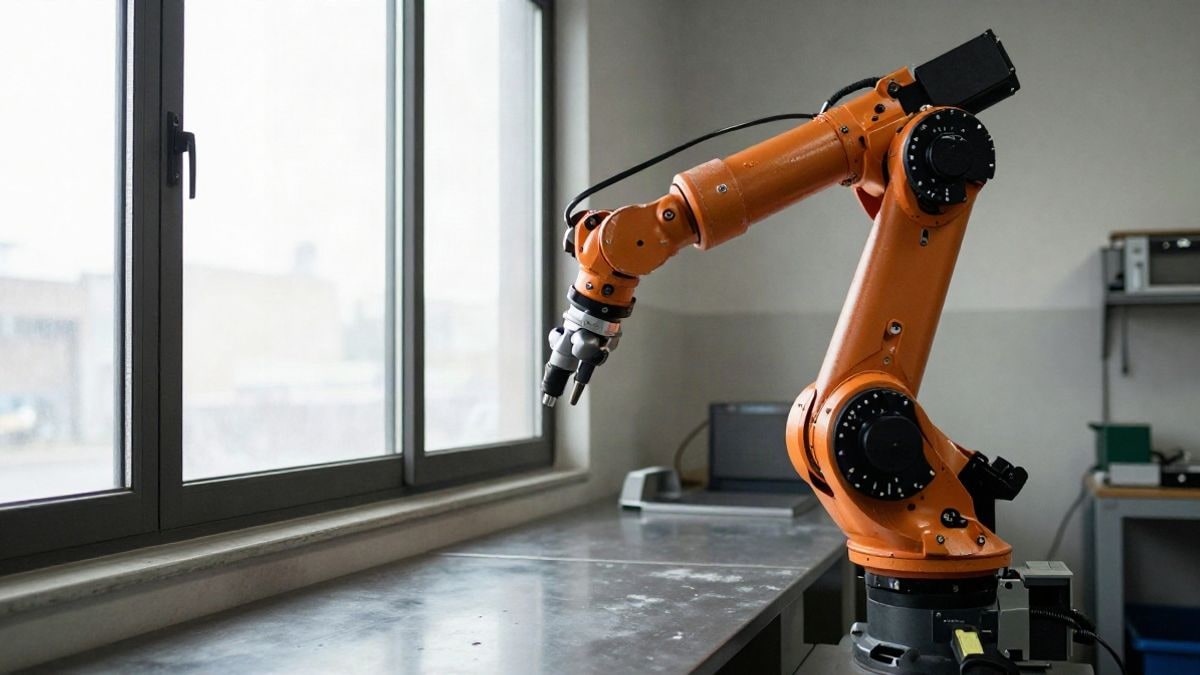
Tesla claims it is already producing its humanoid robot Optimus in Fremont, but its report does not include any unit figures and the robot's hands remain unresolved.
According to ecosistemastartup.com, Tesla states in its quarterly report, published on October 21, that it is already manufacturing its humanoid robot Optimus at the Fremont plant in California. However, the document does not include any unit figures.
The installed capacity table on that same page places the California line in initial startup phase and the Texas line still under construction, with a dash instead of a figure in the capacity column. The report itself, therefore, describes production in its early steps.
In the earnings call, Elon Musk described the moment cautiously:
“We have started what I would call early production on our high-volume line in Fremont. It’s an S-curve, but the initial part has a gentle slope and is somewhat irregular.”
The company validates the manufacturing process, not the product. According to the report, the current process for Optimus is suitable for a commercial product, a distinction that the document carefully formulates.
Neither in the reports for the first, second, and third quarters of 2026 does the third generation of the robot appear. Tesla only mentioned it in the fourth quarter report of 2025, when it promised to present it in the first quarter of 2026, and that presentation was postponed throughout the year.
Musk stated that Fremont has the capacity for most of a line of one million units. That figure is installed capacity, not production. The Chief Financial Officer, Vaibhav Taneja, noted that the factory under construction in Austin will be able to produce many more robots than the one in Fremont.
Musk also set the timeline with a warning:
“There are about 10,000 things that need to go right for the robot's production, and it will progress at the pace of the slowest and least likely of those 10,000.”
The space now occupied by Optimus in Fremont was previously for the Model S and Model X, the closure of which Tesla announced in January 2026. At that time, the company promised to start producing the robot before the end of 2026, and according to the report, it fulfilled this with a two-month margin.
The hands are the main bottleneck that Tesla acknowledges. An executive stated that it is one of the most difficult hardware areas, more complex from an electromechanical perspective than the locomotion actuators, and that they are still developing custom gears because they bear a lot of load and must be reliable.
“We are building robots that do not have perfected hands.”
Regarding the software, Musk indicated that there is still much work to be done on AI for the robot to be truly useful in open tasks. The AI5 chip, with an order of magnitude more computing power than the AI4, would reach the robot by April next year. More computing power, however, does not solve dexterity or mechanical reliability.
The figure of 20,000 robots per week exists as a goal, but the timeline circulating is not Musk's. According to his words, the company will need at least a year, perhaps a bit more, to reach that annualized pace. Some media have placed that target at the end of 2027, a date that does not come from Musk.
Deliveries to third parties would arrive towards the end of next year and would initially be for industrial applications in repetitive and dangerous tasks that are intended to be done almost non-stop. Regarding the unit cost, Taneja said it is still too early to talk about it and that it is close to the expected cost for the Cybercab, without providing any figures.
There is also no public demonstration. No video, independent verification, or images of a functioning unit have been released. Musk promised a video in about a month and specified that the demonstration could take between one and two months to be credible.

You may also like