
Portuguese economist Ricardo Reis dismisses a debt crisis in France similar to that of Greece or Portugal and predicts at least one ECB rate hike before the year ends.
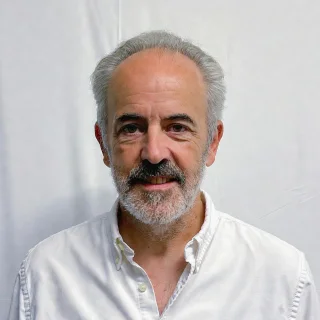
According to La Vanguardia, Portuguese economist Ricardo Reis, a professor at the London School of Economics and a name that was mentioned last month to head the economic department of the International Monetary Fund, believes that the risk of a debt crisis in France is low. Reis was in Barcelona last week for a series of lectures organized by the Barcelona School of Economics.
According to the economist, France faces two negative factors at once: the rise in interest rates, which extends from Japan to the United States and passes through Europe, and the difficulties of the French state in approving a budget, in a context of highly contested elections.
However, Reis emphasizes that France's financing needs for the next twelve months, that is, the amount of new loans or bonds it must obtain or amortize, are not very high. Therefore, in his opinion, a scenario similar to the crisis of Greece and Portugal in 2010 and 2011 remains remote. He also does not observe a capital flight.
Regarding the role of the European Central Bank, Reis believes it is justified that the institution has said it should not intervene for now, because the problem is not one of market functioning nor does it have a monetary origin. If yields were to spiral out of control in the future, the ECB would have tools, although according to the economist, this would only provide temporary relief and should be accompanied by a fiscal adjustment in France.
As for interest rates, Reis anticipates more hikes. He states that oil prices remain high and that second-round effects are beginning to be felt in other commodities. On the timeline, he says:
"I believe at least one more hike before the end of the year would make sense."
The economist adds that markets are also expecting new hikes. He also warns that the inflation from 2021 to 2024 has left scars, especially in inflation expectations, meaning that a second shock will translate to prices sooner.
Reis positively assesses Christine Lagarde's management at the helm of the ECB, which is ending her term, because the institution acknowledged its mistakes and changed course ahead of the Federal Reserve and the Bank of England. Regarding the new cycle of Kevin Warsh at the Federal Reserve, he indicates that tariffs have influenced inflation in the United States, although according to his models, the effect over the last twelve months would have been between 0.3% and 0.4%. Warsh, he adds, has provided assurances of independence from the Government.
Finally, the economist argues that asking for low rates to ease deficit management is an illusion, as it leads to higher rates in subsequent years due to high and persistent inflation.
You may also like