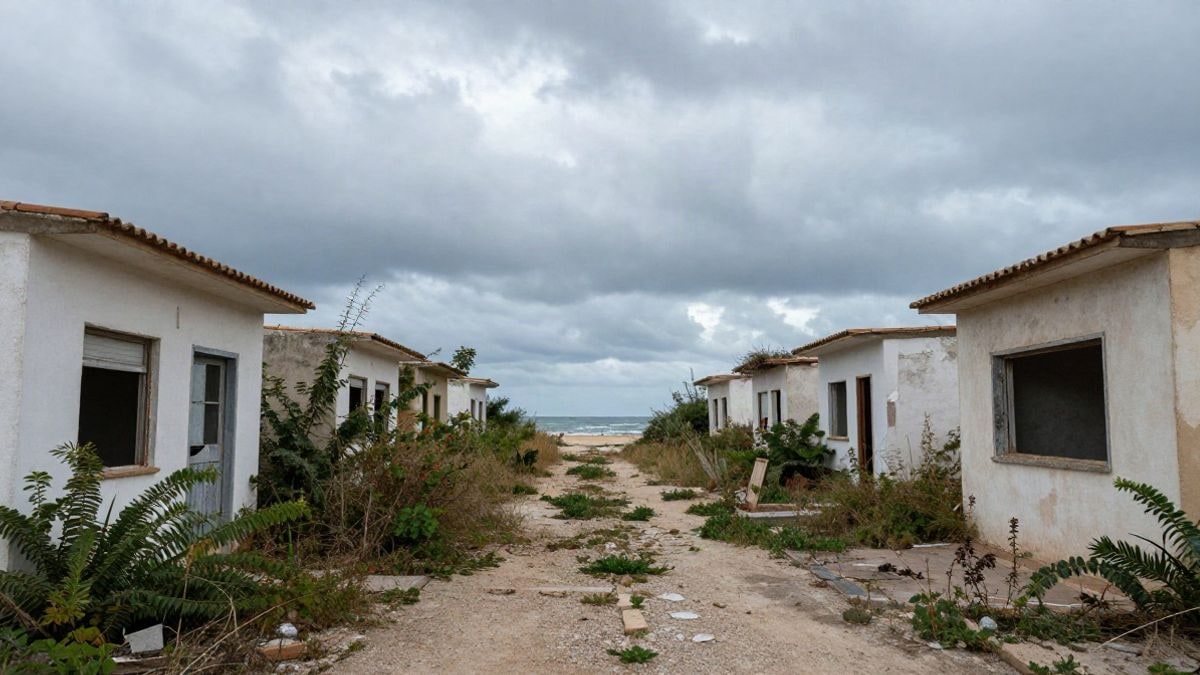
The housing deficit in Spain stood at 750,000 units between 2021 and 2025, according to the Bank of Spain, while prices reached €2,355/m² in the second quarter, a historic record.
Access to housing remains unresolved in Spain. The lack of agreement among political parties to reach a State Pact that transcends electoral cycles keeps a crisis open that affects a large part of the population, according to tribunasalamanca.com.
The housing deficit in the country was around 750,000 units between 2021 and 2025, according to the Bank of Spain, a figure that nearly doubles the housing shortage recorded in other European countries, such as Italy. While Spain creates around 91,000 homes per year, 250,000 households are formed.
The lack of supply to meet growing demand is putting pressure on prices, both for purchase and rent. The latest data from Eurostat shows a 12.1% increase in housing prices in Spain during the second quarter of the year, a rise that more than triples the average increase in eurozone countries, where the rise was 4%.
According to the valuation statistics from the Ministry of Housing, which began in 1995, the price of housing reached €2,355/m² in the second quarter, a new historic record that surpasses the values of the bubble.
While the previous financial crisis was characterised by an excess of product and the lack of solvency of many mortgagors, the current issue is fundamentally a supply problem. The sector demands a national alliance, lower housing taxes, a new Land Law, more tax incentives, greater support for industrialisation, and legal security to attract the capital needed to build so many homes.
In addition to the rise in material prices and interest rates, which increase financing costs, housing faces another problem: the lack of labour to meet the construction levels required by the country.
The shortage of product is also very evident in the rental market. In the absence of official statistics, the data managed by Idealista keeps Madrid as the most expensive capital (€23.3/m²), followed by Barcelona (€20.2/m²) and Palma (€19.3/m²). These values force a large part of tenants to allocate more than 30% of their income to rent payments.
Moreover, only one in every 65 homes in Spain is public, which equates to 1.5% of the housing stock, leaving the country at the bottom of Europe, far behind the Netherlands (34%), Austria (23.6%) or Denmark (21.5%).
The rejection this week of the last two housing decrees, one of which established the automatic extension of leases, has highlighted the lack of parliamentary majorities. The eviction of Maricarmen Abascal, aged 87, has sparked protests in the streets and underscored the need to reach broad consensus to alleviate the crisis.
The President of the Government, Pedro Sánchez, is taking this weekend for analysis and reflection to decide whether to bring forward the general elections.

You may also like