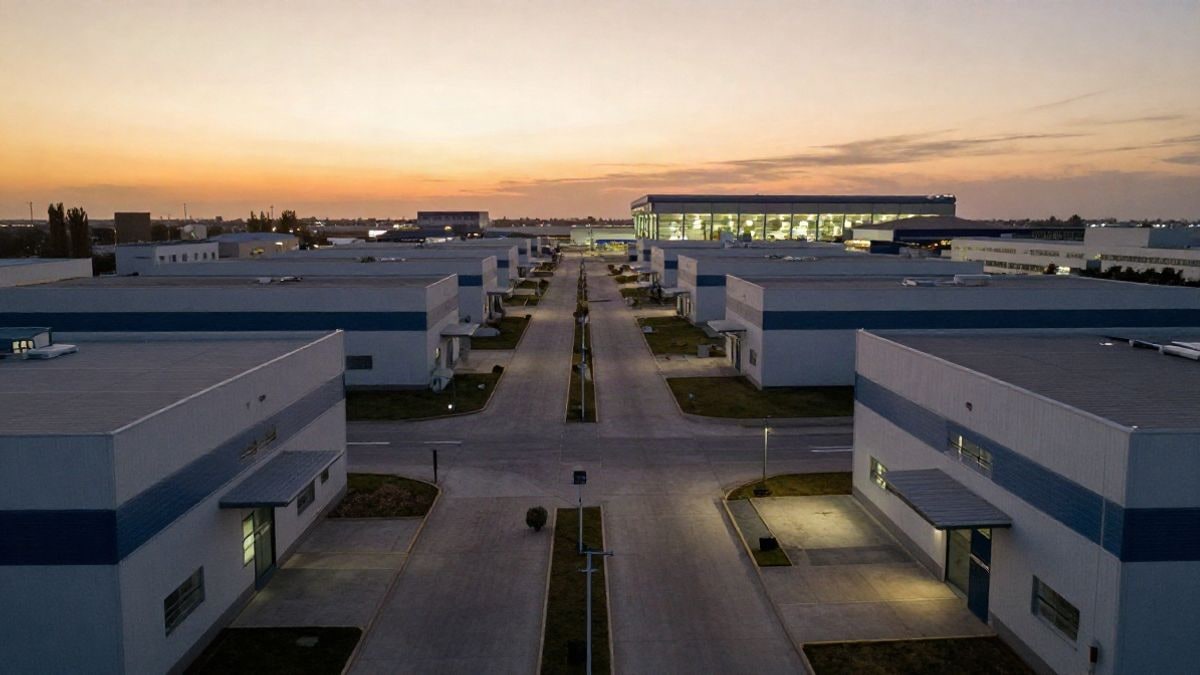
Indra's CEO, Josep Maria Recasens, advocates for a model of leading companies that integrate suppliers to gain scale. The company plans to quadruple its industrial footprint between 2024 and 2027.
Indra's CEO, Josep Maria Recasens, defended on Friday at the Foro La Toja a growth model based on leading companies that integrate suppliers, technology firms, and specialised companies, rather than absorbing the rest of the industrial fabric. According to murciaeconomia.com, Recasens rejected the idea that Indra aims to become a national champion at the expense of swallowing the sector.
“When you have a national champion, you have many national losers”
The executive pointed out that Spain needs “leaders, tractors, and integrators” capable of coordinating the industrial ecosystem to compete at the same table as the large European groups. This intervention comes days after Indra merged its Defence and Space businesses into a single general direction, led by Juan Ramón Hernández, as a precursor to its new strategic plan.
The company has set a goal to quadruple its industrial footprint between 2024 and 2027, exceeding ten production centres and 100,000 square metres of industrial space. This growth will be supported by a network of national suppliers and will maintain over 80% of the industrial content linked to Spain, according to Recasens.
The strategy is already reflected in contracts awarded to Indra, which participates in air defence systems, military vehicles, space systems, and tactical drones for the Armed Forces. In September, it announced a programme to develop and manufacture 147 unmanned aircraft of Spanish design, with participation from companies, universities, and technology centres from various autonomous communities.
Indra closed the first half of 2026 with a order book of 20.533 billion euros, a 117% increase from a year earlier. Contracting reached 5.010 billion, up 58%, and revenues grew by 30%, reaching 3.179 billion. The Defence business was the one that advanced the most, with a year-on-year revenue increase of 103%. Recasens warned this summer that certain areas of the group would need to multiply their delivery capacity by six to ten times to respond to new contracts.
The company is undergoing a deep internal reorganisation. On 29 September, the board approved the departure of five senior executives and reduced its management committee to ten members reporting directly to the CEO. Among the changes is the integration of Defence and Space into a single direction and the creation of a new General Directorate of Strategy, Technology, and Product. The aim is to prepare the structure for the new strategic plan that Indra will present on 25 November, detailing how it will tackle the anticipated growth in defence, space, and technology.
Regarding technological sovereignty, Recasens defended a less rigid view: Europe does not need to produce all components within its borders, but it does need to have alternatives and its own capabilities to decide on the strategic elements of its value chain. He cited semiconductors as an example, an area in which he considers it inevitable to maintain external dependence for years. The goal, according to his approach, is to ensure decision-making capacity over data, energy, digital infrastructures, and critical components.
Recasens also warned of the risk that Europe retains its own companies and applications but loses control of the elements that support the technological chain, from chips and data centres to the energy needed to operate the systems. He compared this situation to European automotive, where there are large manufacturers and industrial plants but part of the raw materials, electronic components, and refining processes depend on third countries. Therefore, he called for a coordinated European strategy and a common regulatory framework to avoid different standards between states.

You may also like