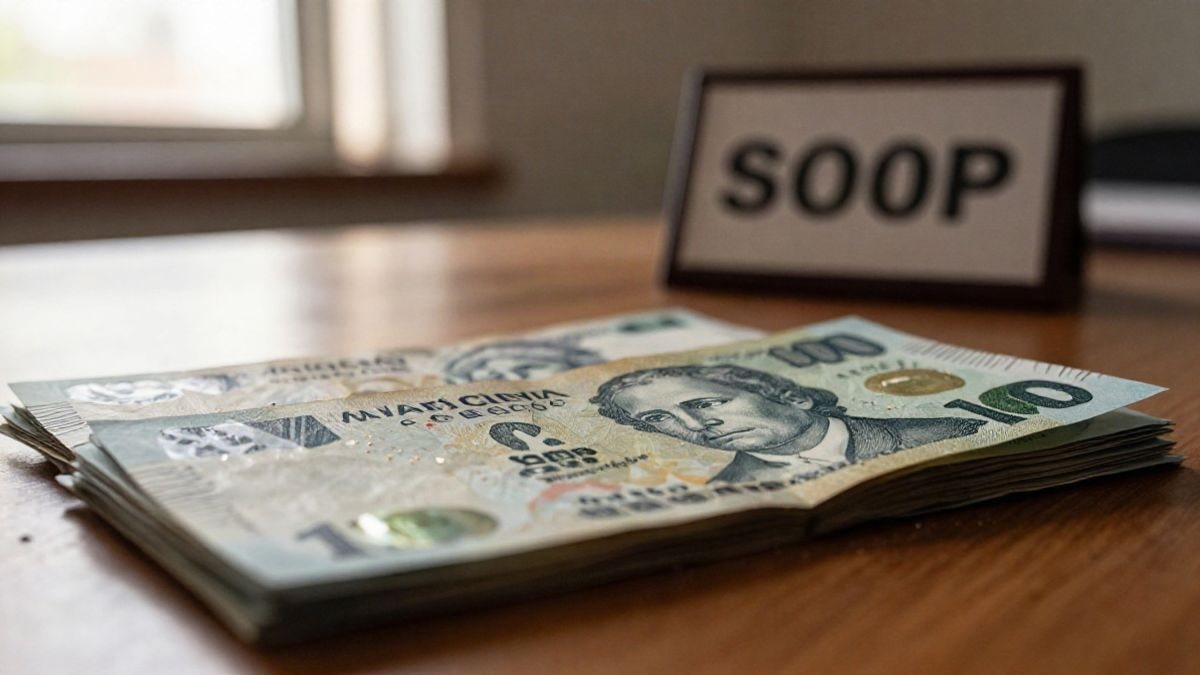
The country has gone from 512,357 to 480,067 productive units since November 2023, with 948 closures in July 2026 alone. The contraction hits SMEs supplying groups like Repsol, BBVA, or Meliá.
The Argentine economy has lost 32,290 companies since Javier Milei took office, according to the latest report from the Centre for Argentine Political Economy (CEPA), which compares the registered productive units in November 2023 (512,357) with those in July 2026 (480,067). Relatively speaking, one in every sixteen activities that were operating three years ago has ceased to function. In July alone, 948 companies closed, nearly thirty each day, as noted by moncloa.com.
Trade and various industrial sectors concentrate the closures, according to the document. These are the sectors most linked to domestic demand, which has dwindled with an annual inflation rate of 33.8% in July. Official activity data from the Argentine statistical institute point in the same direction: the economy contracted by 2.9% in July compared to June and 1.4% compared to the same month last year.
The impact on formal employment is 437,611 jobs destroyed since December 2023, of which 3,485 were lost in the last recorded July. The disappearing fabric is primarily SMEs: suppliers, distributors, and customers of large companies.
Less consumption, fewer companies, and less formal employment: the market that Spanish companies are closely monitoring has shrunk by 6.3% in three years.
Argentina has been one of the natural destinations for Spanish investment abroad for decades, with a solid presence in banking, energy, tourism, and distribution. Groups like Repsol, BBVA, or Meliá have been operating there for years, and their accounts are also read in pesos. For these subsidiaries, a contraction like the one described means fewer sales in commerce, rising delinquency in banking, more fragile occupancy in hotels, and postponed industrial purchases.
The report warns that the figures alone do not allow attributing each closure to a single cause. The loss of purchasing power of households is the explanation highlighted by the document: with rising prices, families buy less, and this slowdown reaches the corner shop before it hits the large corporation.
Spain is not new to such episodes. In December 2001, the corralito and the largest sovereign default in history left Spanish subsidiaries with frozen assets and accounts that were impossible to repatriate. A decade later, in 2012, the government of Cristina Fernández de Kirchner expropriated 51% of YPF from Repsol, and the Spanish group ended up receiving compensation in bonds that came years later.
The fundamental difference with that episode is the nature of the blow: then there was an explosion; now, a drip. More than 32,000 fewer companies in less than three years depict a smaller market, with less competition and less cushion for foreign subsidiaries. Spain ranks among the historical foreign investors in the country, and decisions made in Buenos Aires influence the fine print of expansion plans in attractive sectors: energy, agribusiness, lithium, and tourism.
Looking ahead, attention is on two indicators. The first is whether the monthly closure rate moderates or accelerates in the upcoming reports. The second is whether the decline in consumption begins to be reflected in the results that Spanish subsidiaries report to their parent companies.

You may also like